If you are a lonely, sleep-deprived knight of Kelemvor who has kept steadfast watch for three days, and then had a stirring evening of meeting helpful, mysterious strangers, kindly healing these same strangers’ wounds, and heroically smiting some pesky Undead, you will want to eat stew. If you are a mere mortal who is bundled up and simply trying to stay warm in these snowy times you will….also want to eat stew!
Lady Aundra Blackcloak is a wise and kindly friend. She makes a nourishing dinner for the Doomguide. A simple dish, intended to soothe and satisfy during trying times. Vaikner Bootsman (wisdom to be determined) is eager to be friends too. He turns Lady Blackcloak’s plain dish into a more ambitious offering. Intended to intrigue and delight, his stew is enchanted to include Amber’s favorite spice.
I include my take on both of these dishes here. I will not try to choose the superior stew. They are very different and I happily and greedily devour each when it is placed in front of me. But I am pleased that Vaikner made his gustatory overture of friendship. It allowed Elodie, awash in the fragrance of comforting memories of her Papa’s cooking, to momentarily forget her shyness. And to talk to Amber of Calimshan and their shared enthusiasm to travel there. I mean, it really could not have gone more smoothly…
When embarking on any stew-related shenanigans, may I suggest first watching Kenji Lopéz-Alt’s great presentation on beef stew? Both of these recipes involve a different protein but the general principles related to building flavor, controlling temperature, and not over-cooking your meat, still apply.
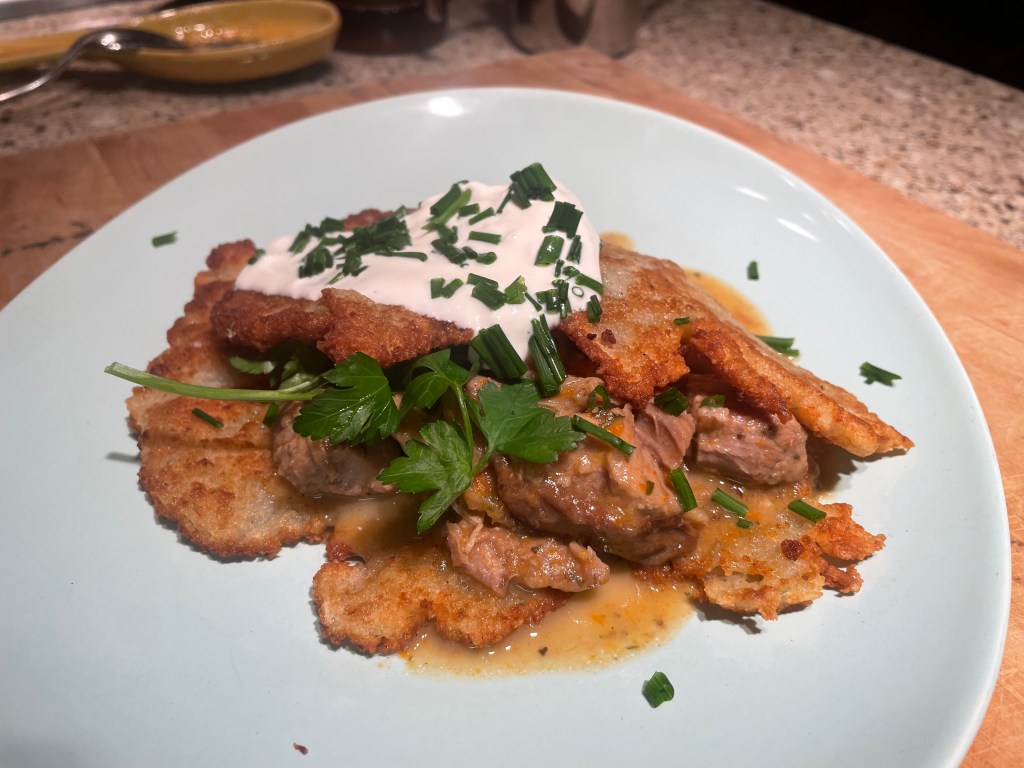
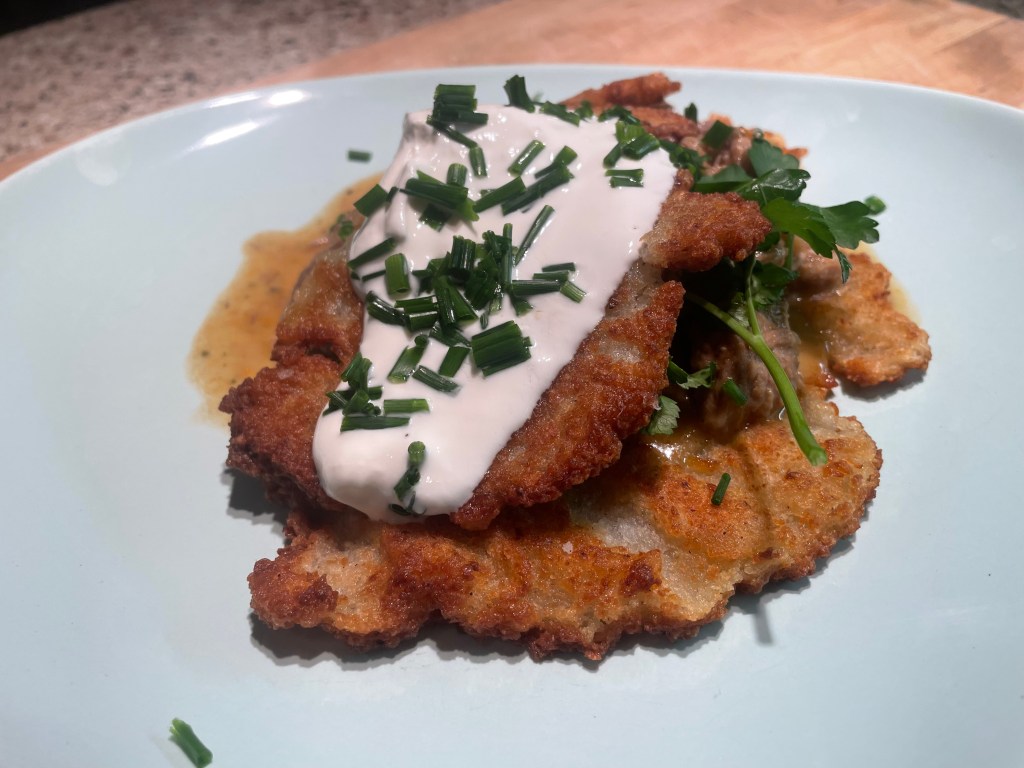
Placek Myśliwski (Hunter’s Pancake): Polish potato pancake filled with creamy pork and mushroom stew.
Perhaps a little more elaborate in presentation than Aundra’s plainly cooked supper, this is still, at its porky heart, a sturdy, meat-and-potatoes dish. Rich with cream, sweet with onions and carrots, redolent of mushrooms, it is a fine example of a stew where all of the components nestle down contentedly together and form something unforgettably harmonious. Comfortingly simple but truly a celebration of the best that each ingredient has to offer. Then, when tucked into a crisp, golden blanket of fried potato pancake, drizzled with sour cream, and showered with snipped green chives…well, even the ghastly fact that the City of the Dead is under necromantic attack becomes just an annoying background distraction to the pleasure of eating this dish.
Variously known at Hunter’s, Bandit’s, or Hungarian Pancake, the filling in this dish is usually a tomato-based pork stew with roasted peppers. That variant is really, really good. But, after I saw a recipe on obiadgotowy.pl calling for a wild-mushroom stew to fill the potato pancake, I very much wanted to try that. I shamelessly swiped the concept of switching out the sweetly-sour, tomato-ruddy stew for a unctuously creamy, mushroomy concoction. But the filling recipe does not resemble that on the website much; I went with my own stew-building style and favorite flavorings. And the crispy potato pancake that envelops all this savory goodness is made according to my standard recipe for Placki Ziemniaczane (essentially the Polish version of latkes). I hope that Lady Blackcloak would approve. I mean, I really really hope so. Definitely do not want that tiny little terror coming after me with her gardening shears…
For the Mushroom and Pork Stew
Serves 8-12
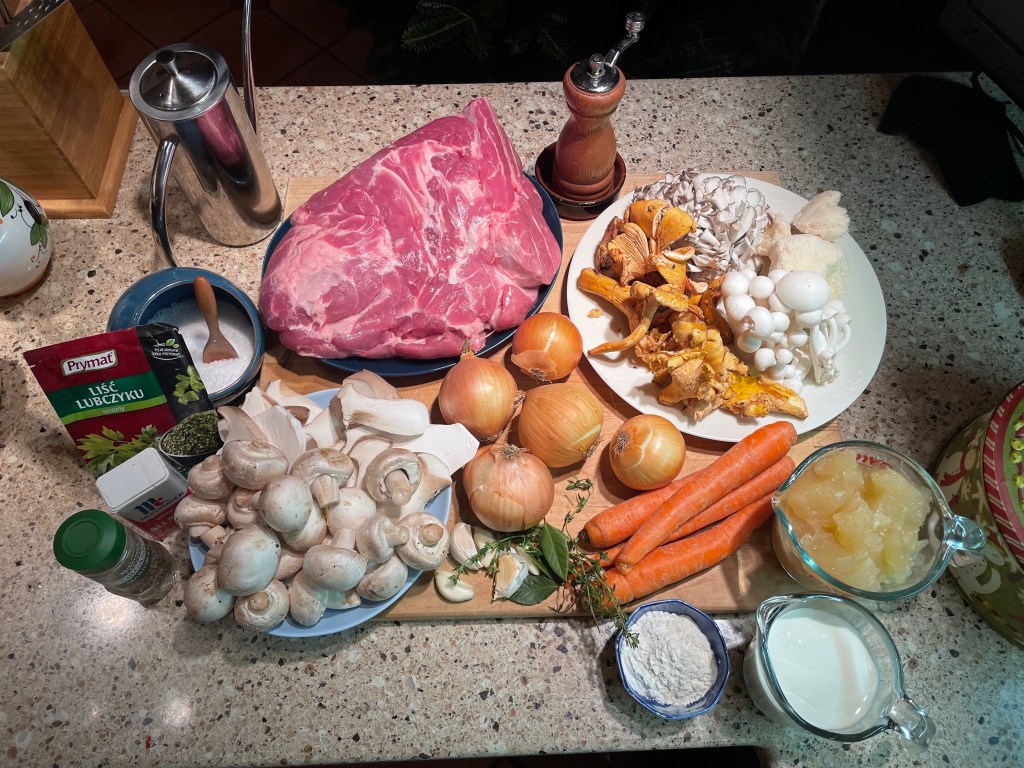
Ingredients:
1 raw, bone-in pork butt/pork shoulder (approx. 4kg/9lb)
30ml/2 tbsp neutral cooking oil
Salt and pepper to taste
5 medium yellow onions, peeled and diced medium fine
3 large carrots, peeled and diced medium fine
3 garlic cloves, peeled and minced
3 sprigs fresh thyme
2 fresh bay leaves
5g/1tsp dried marjoram
5g/ 1tsp dried lovage
2-3 whole allspice berries
1L/4 cups chicken or vegetable broth
500g/1lb mixed mushrooms – if this was the time of year/place to forage my own, or if they didn’t cost a million dollars per pound, I would make this dish entirely with chanterelles. My golden little beloveds. But, seasonal and economical realities being what they are, my mix here is made of a stingy little handful of chanterelles, a pack of mixed fun-shaped fungi like King Trumpet, Lion’s Mane and Maitake, and generous filler provided by that stodgy old stand-by: button whites.
30g/2tbsp butter
500ml/2 cups heavy cream
40g/1/4 cup all purpose flour
Method:
- Preheat the oven to 300F.
- Trim excess fat away as you chop up your pork butt into roughly 5cm/2 inch chunks. I really like this cut of pork for stew. It will stay juicy and flavorful during a fairly long braise. And I save all the scraps that are just a bit too fatty and freeze them. They can be used for stock or ground up for sausage. But I hoard them to make smalec, the onion and marjoram infused meat-fat spread that, shmeared onto a chewy slice of rye bread and consumed along side a crunchy, briny dill pickle, is a beloved Polish snack. Then, after all the meaty bits are trimmed away, you get the bone. Either freeze that too (soup, anyone?), or throw it into your stew for extra flavor.
- Heat up a Dutch oven or heavy oven-safe pot over medium-high heat. Add oil and then brown your chopped pork. Do this in batches so as not to overcrowd the pan. You want a strong sizzle, not a wet, watery, steaming situation. Add salt and pepper as you sauté. When each batch is gorgeously browned, remove from the pan and pop in the next lot.
- Once all the pork is browned and out of the pan, lower the heat and add the onion and carrots to the same pot. Scrape up all of the flavorful brown bits and continue frying the vegetables until the onion is softening and turning meltingly translucent.
- Add in garlic, fresh and dry herbs, and allspice berries. Stir and then pour in the chicken stock. Return the pork to the pan and mix everything together. Bring to a gentle simmer, cover, and then place in your preheated oven.
- Cook for 1-1.5 hours until the meat is tender.
- While the pork is in the oven, clean your mushrooms (I am not fond of grit and I choose to wash my fungi). If your button mushrooms are big, halve or quarter them. Tear your other mushrooms into bite-appropriate pieces.
- Put the mushrooms into a wok or deep sauté pan and add enough water to cover. Bring to a boil and then simmer until the water has all but evaporated. Throw in a knob of butter (that’s a quaint and informal way of saying add 15g/1tbsp of butter) to the wok. At this point, the pan will be mostly dry, all of the mushroom flavor will be concentrated down in the remaining pan juices, and the mushrooms will be cooked. You can now smugly sit back and watch them start to turn golden and crunchy. This is the technique used by Lucas Sin and it is awesome. As is he. Seriously. Please visit and immediately become hooked on his super approachable, wonderfully informative, delightfully detailed cooking videos. Here is a link to the mushroom one: https://youtu.be/KkUSb4y_sV0
- Remove the pork stew from the oven, carefully taking off the searingly hot pot lid. Add the mushrooms and stir into the stew.
- Gradually add the 1/4 cup flour to the 2 cups heavy cream and stir thoroughly to get rid of any lumps. Pour this mixture slowly into the stew, stirring constantly. Cover again and place back into the oven for 15 minutes until the stew is thickened and any raw flour flavor is gone.
- You can serve this now but, like any other stew, it is even better the following day. When you are ready to serve, get on with making the potato pancakes.
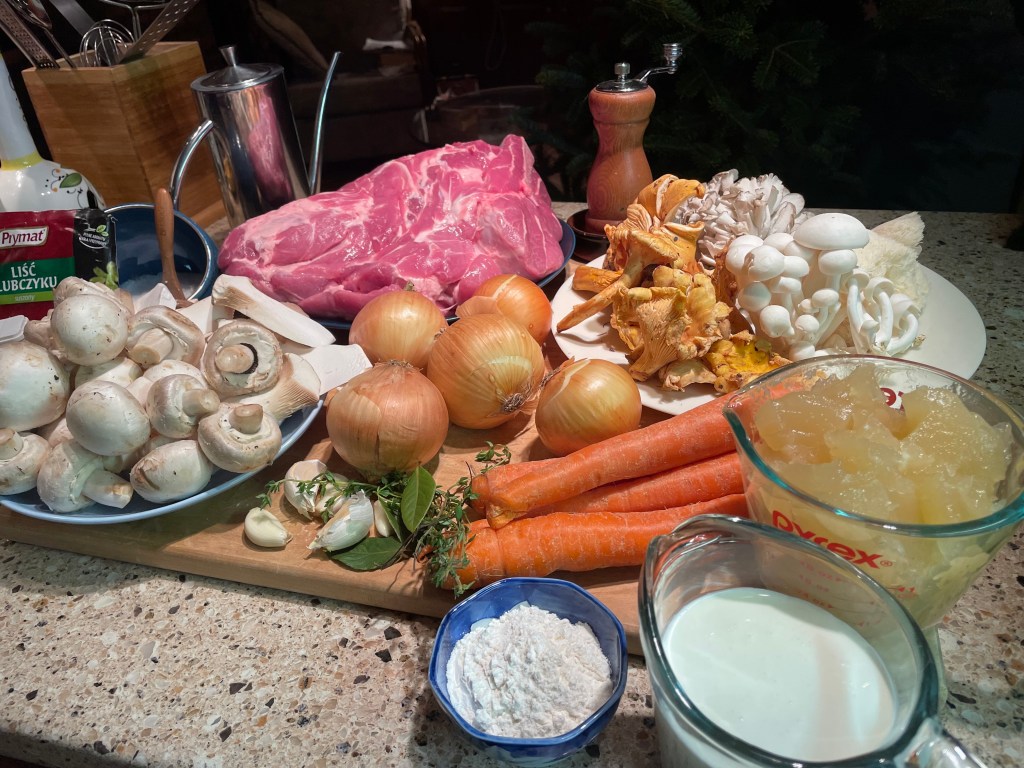
Ingredients: assemble!

Pork trimmed and divided into meaty chunks, fatty scraps, and bone.
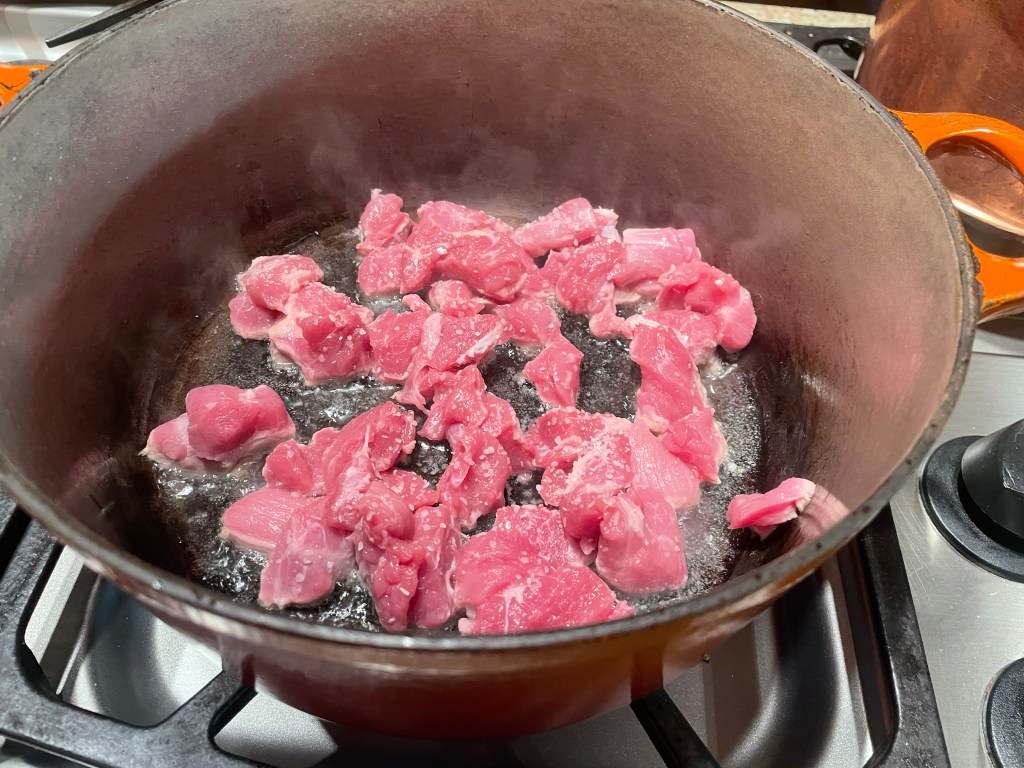
Patiently, in batches, brown the meat.
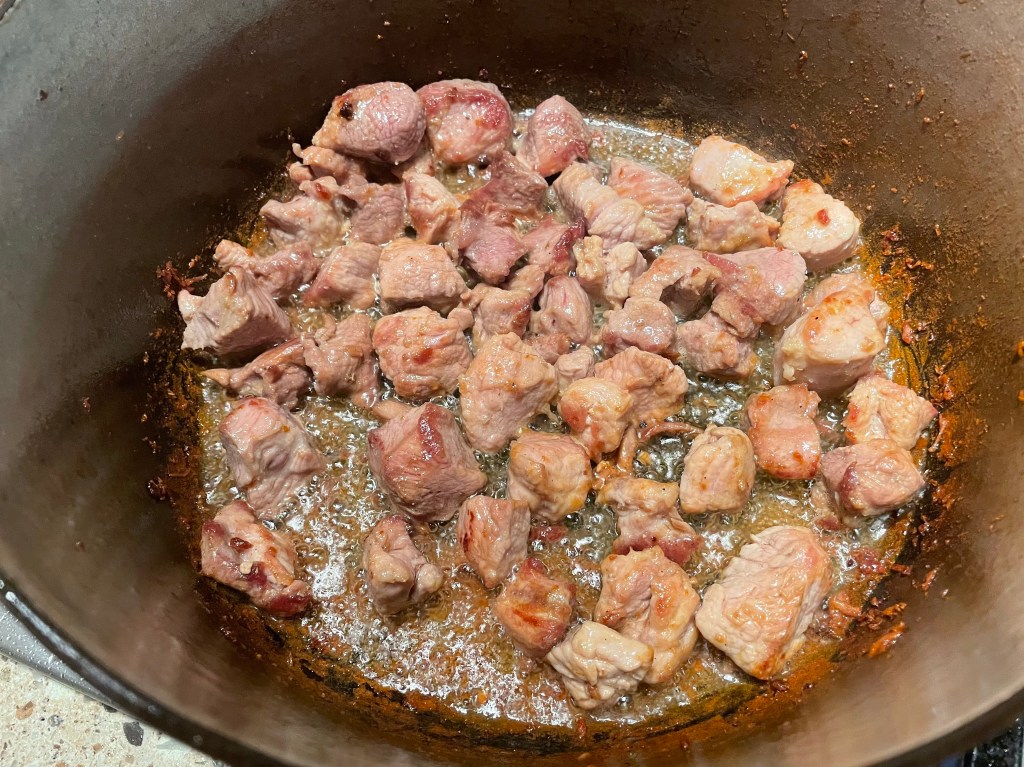
Thus…
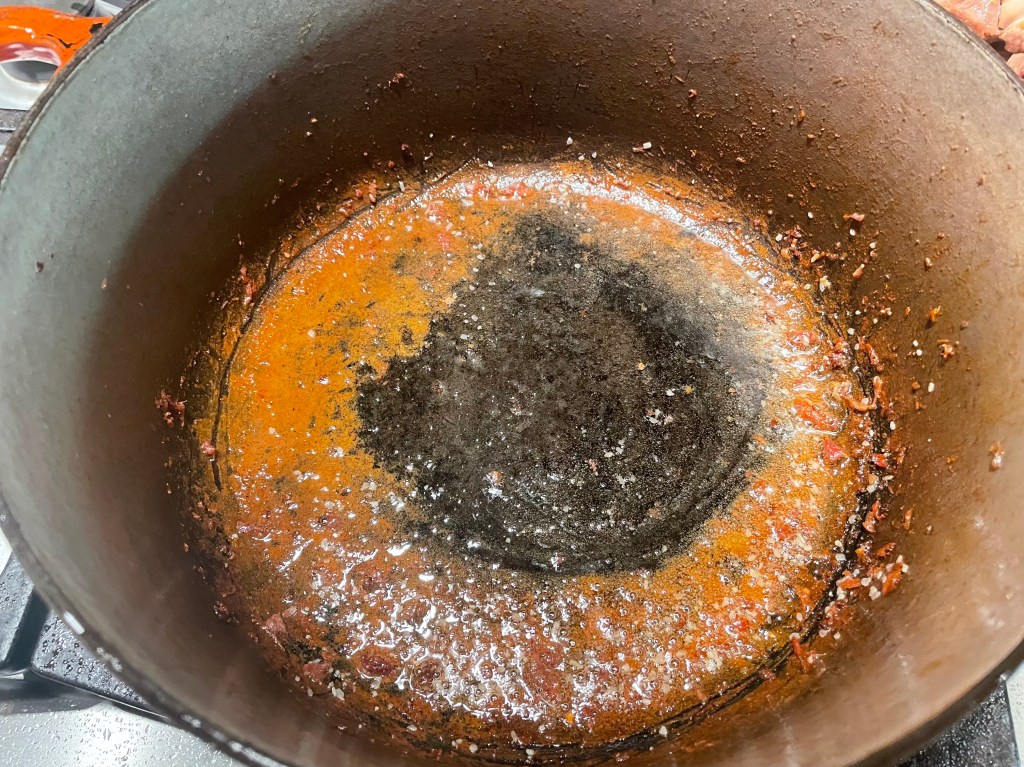
Porky fat, prepare to meet onions.
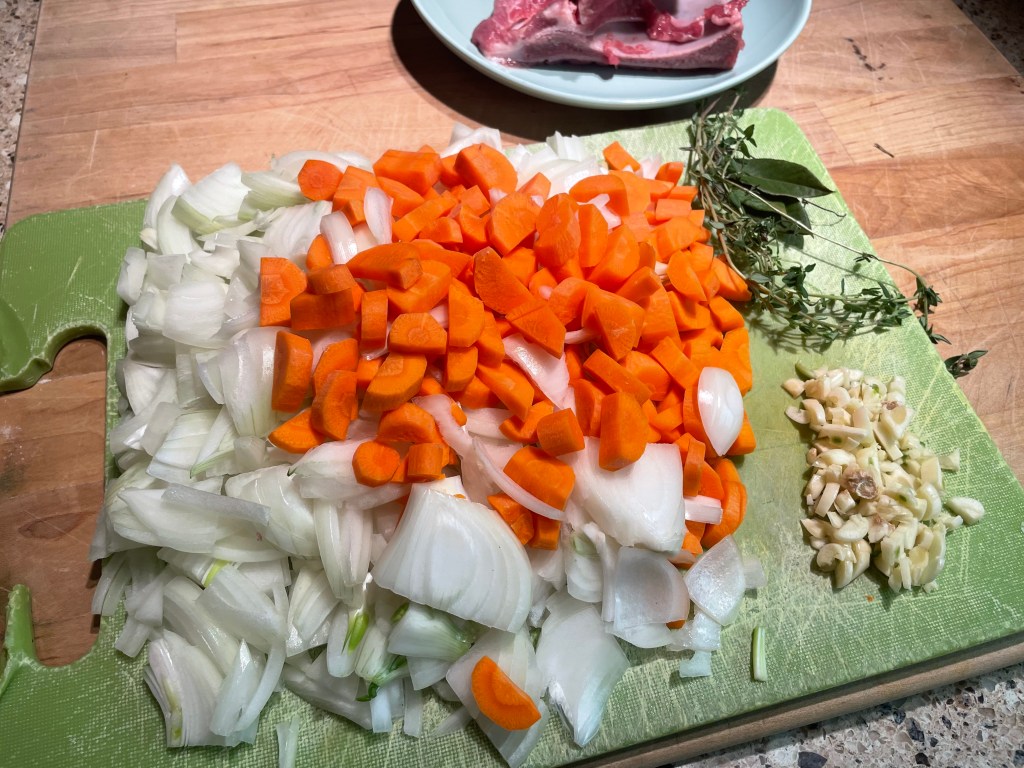
Vegetables chopped and ready…
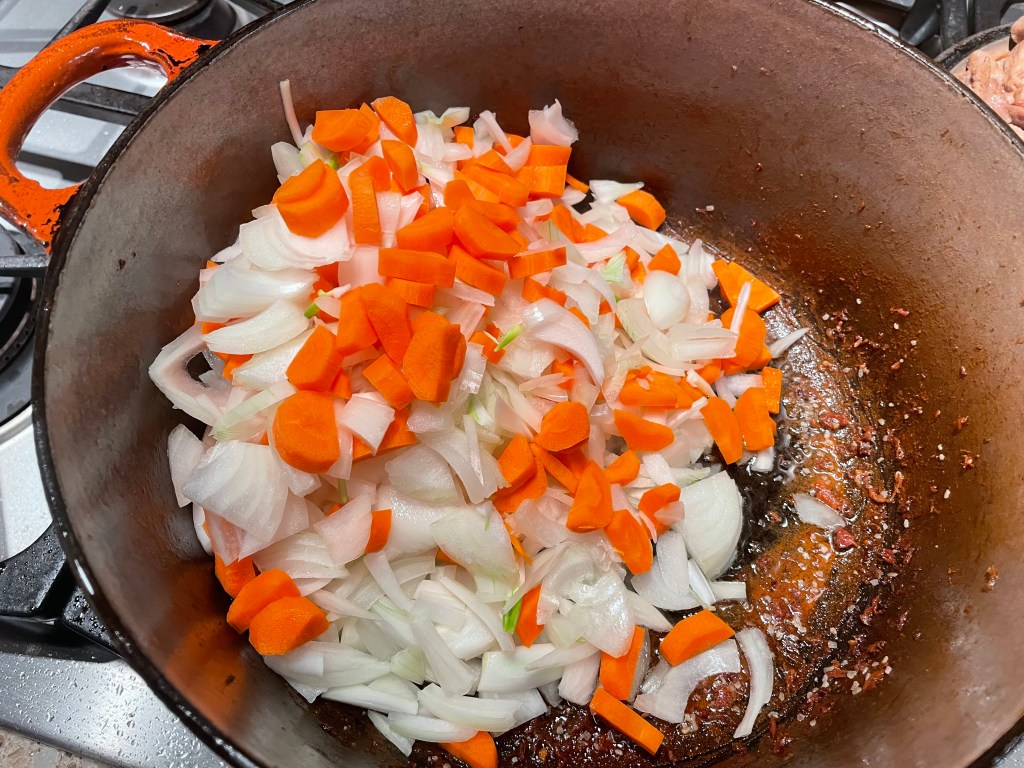
And going in.

Meanwhile, the remaining ingredients are ready and waiting.
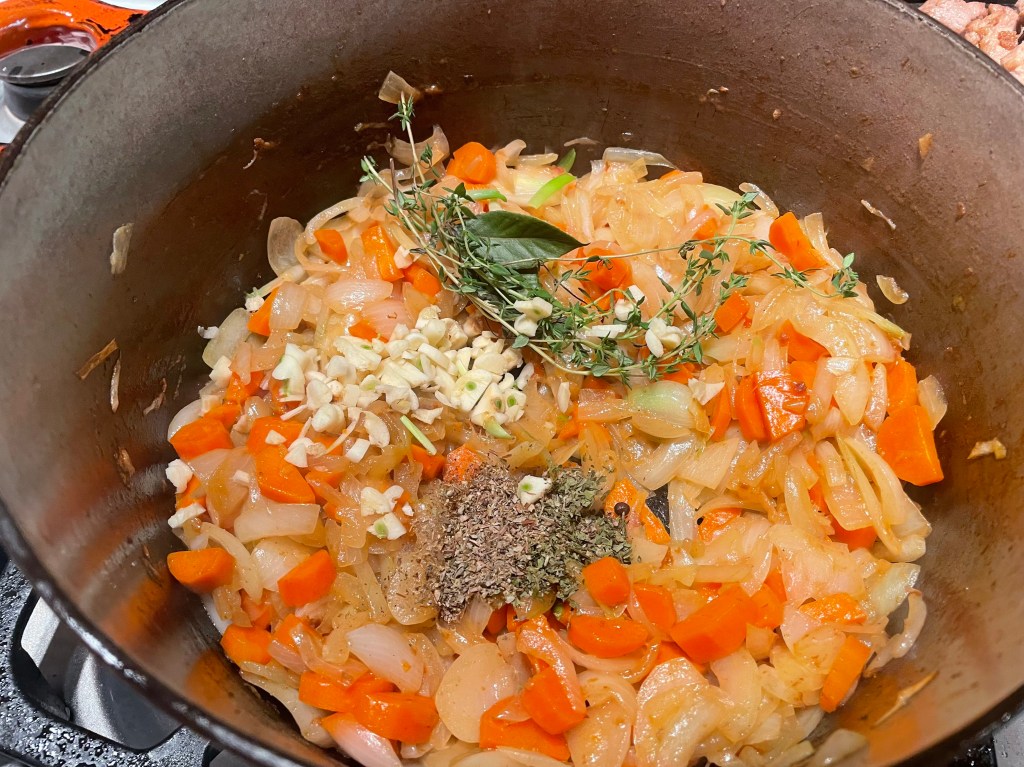
Garlic, herbs, and spices are added.

Stir and simmer briefly.
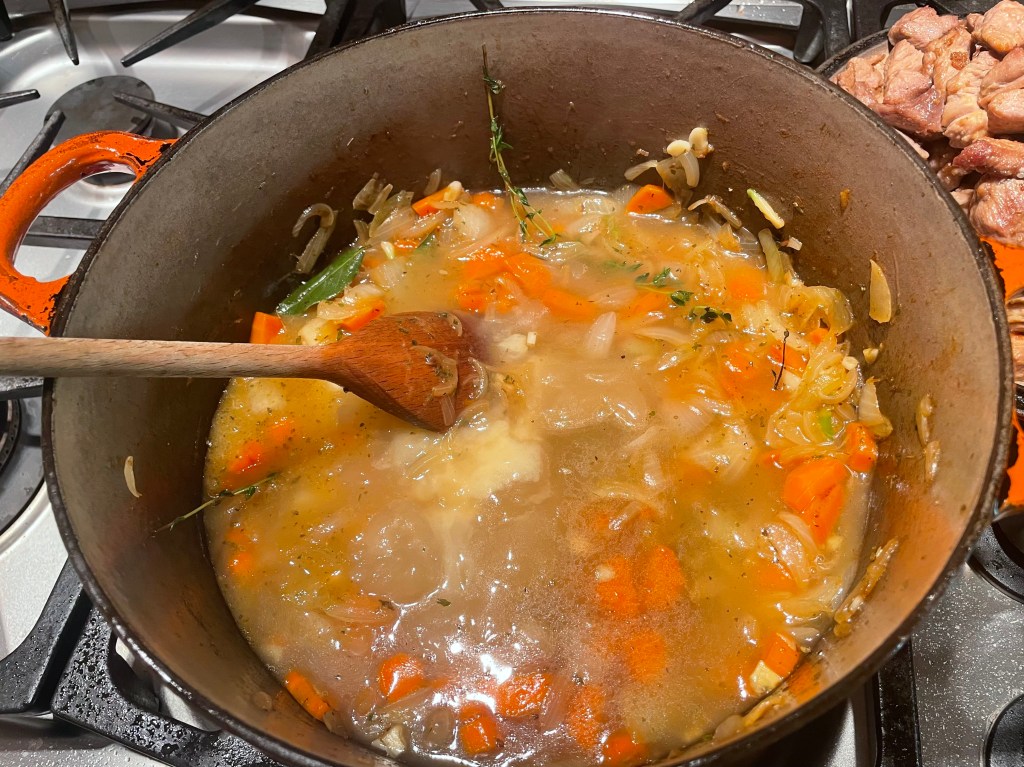
Add in the broth.
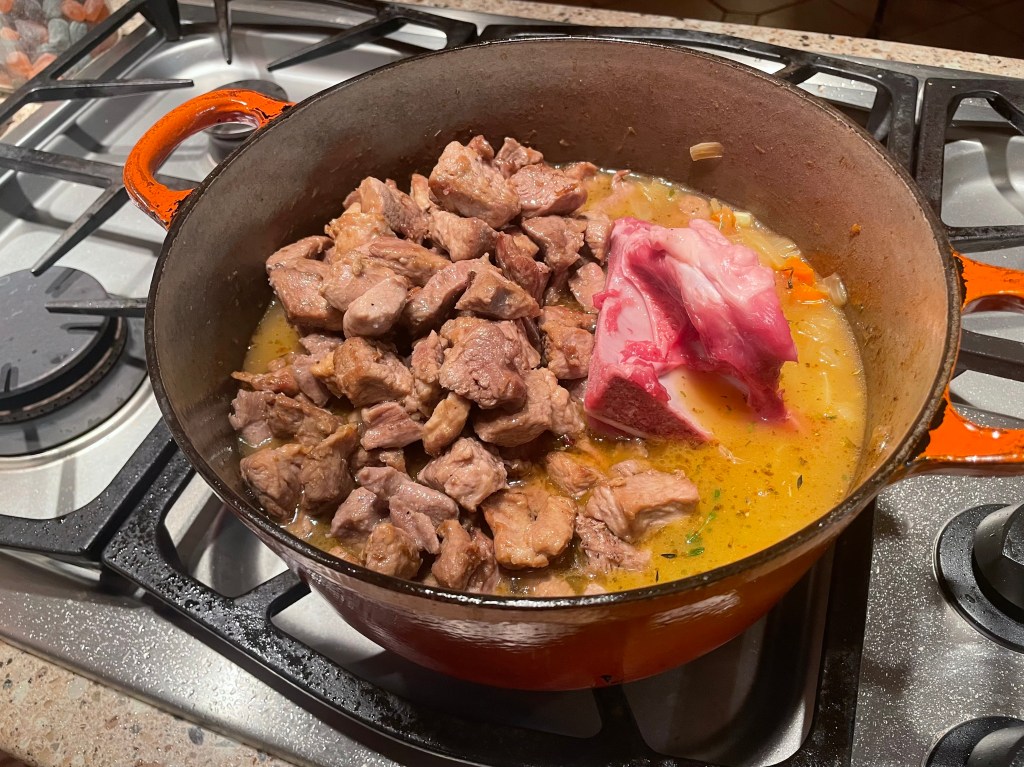
Meat and optional bone go in.
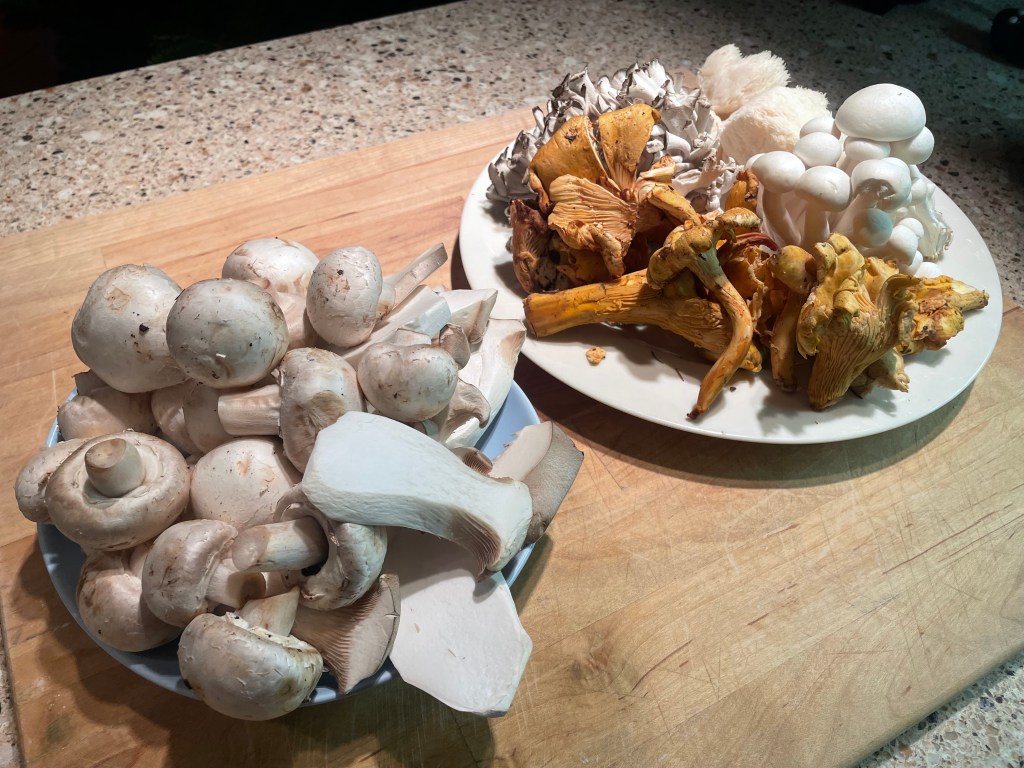
While the stew is in the oven, turn your attention to the mushrooms.
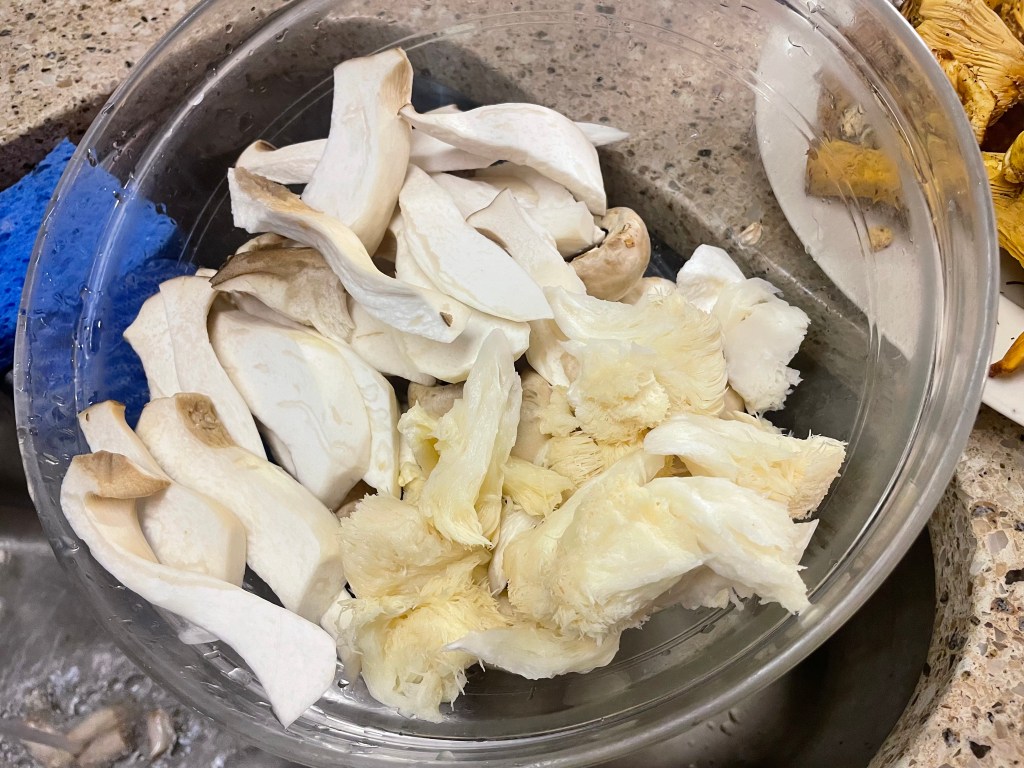
Wash and divide each type of mushroom into stew-friendly chunks.

So sparklingly clean!
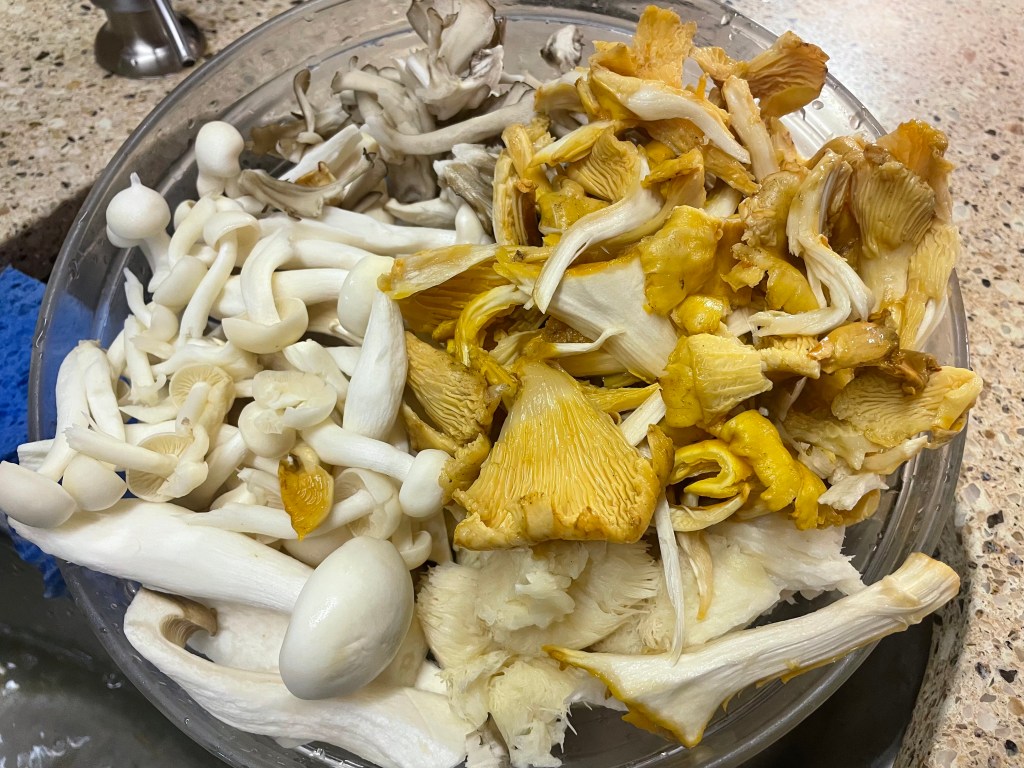
More mushrooms!
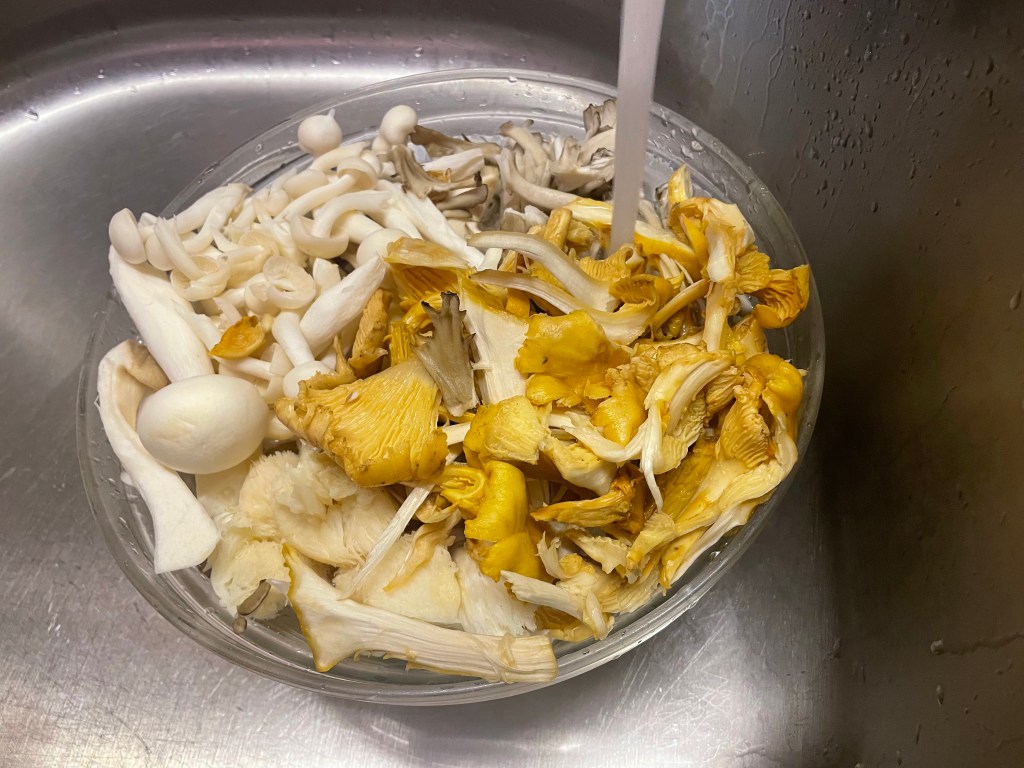
They’re so pretty.
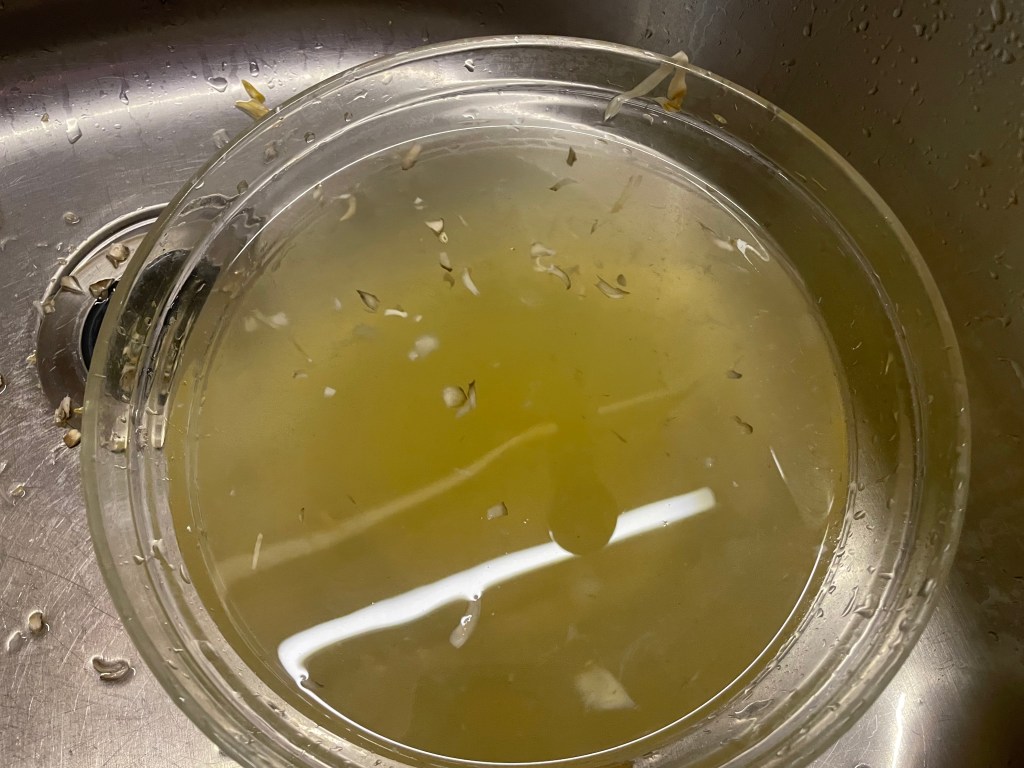
The rinse water left behind, not so pretty.
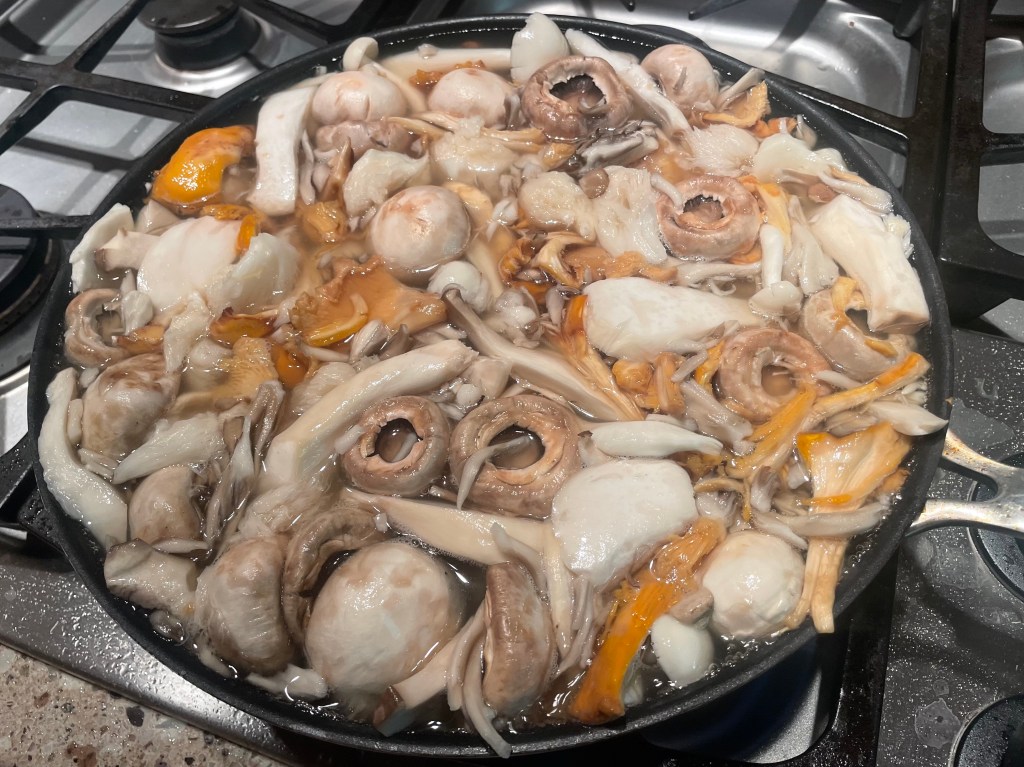
All the clean mushrooms, covered with water and cooking.
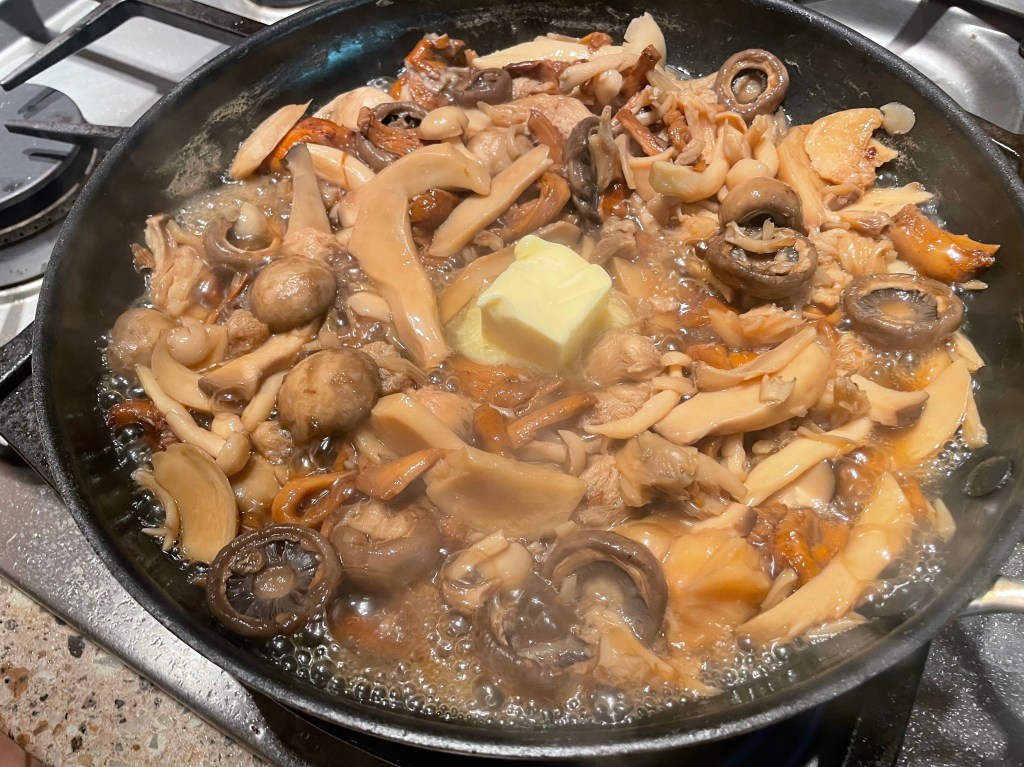
Braising is now in high gear so add butter.

Ready to add to the stew.
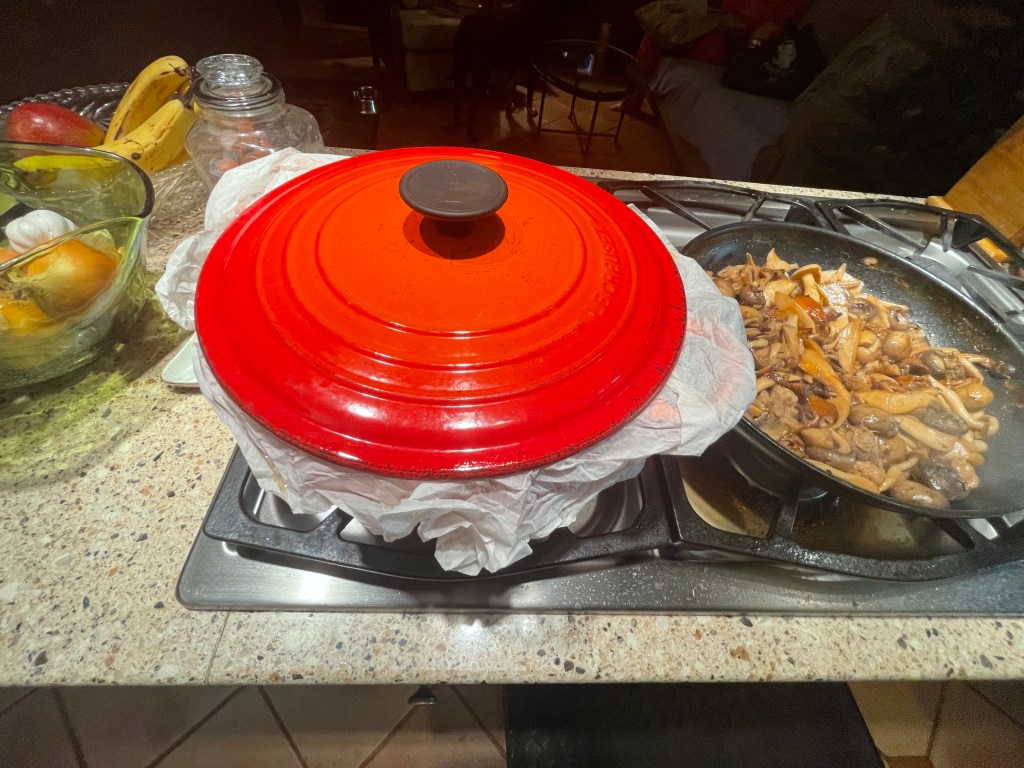
Pork stew and mushrooms, about to become more than the sum of their parts.
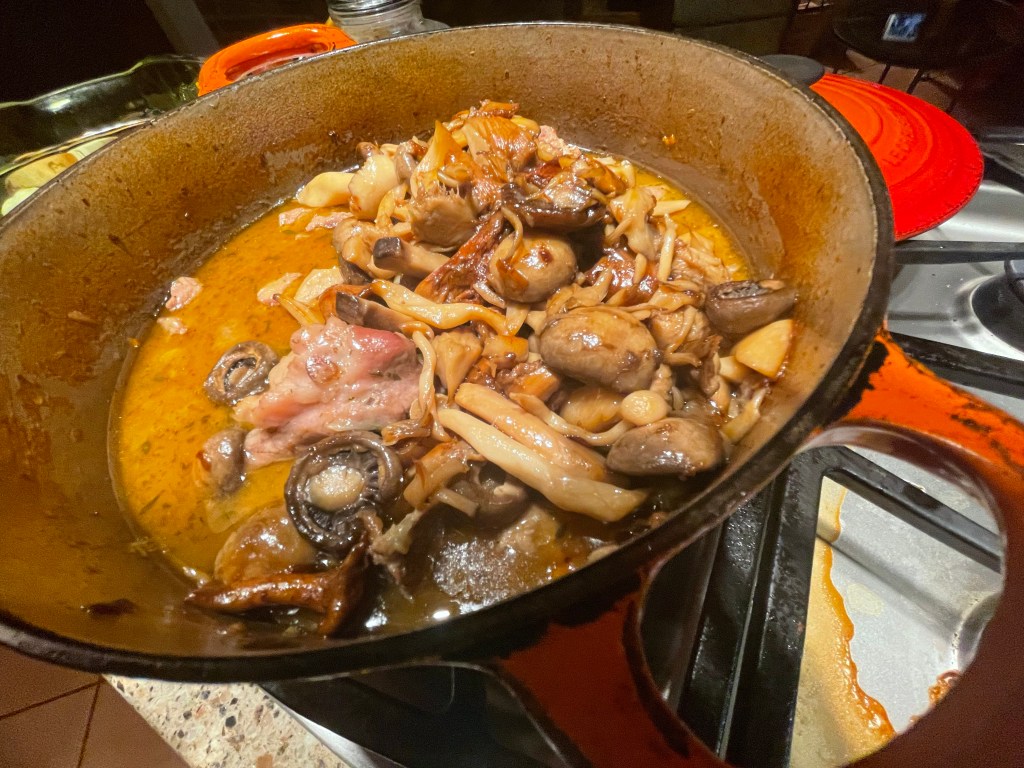
Aaaand – yum!
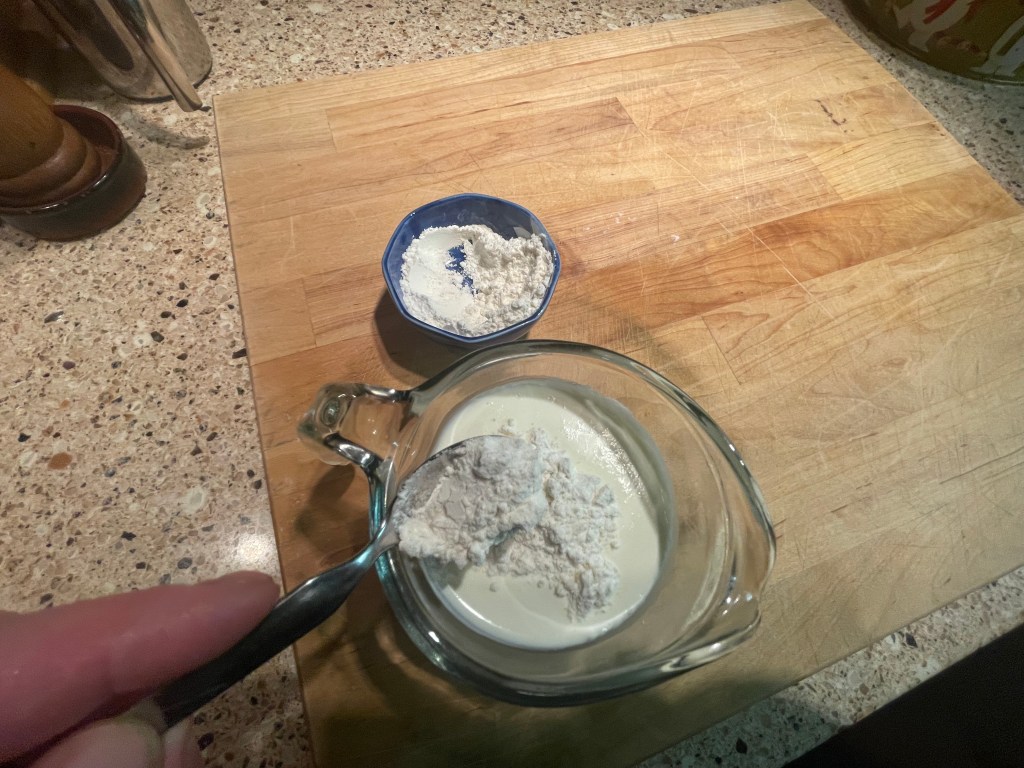
Mix flour with cream.

Gradually add the cream/flour thickening mixture to the hot stew.
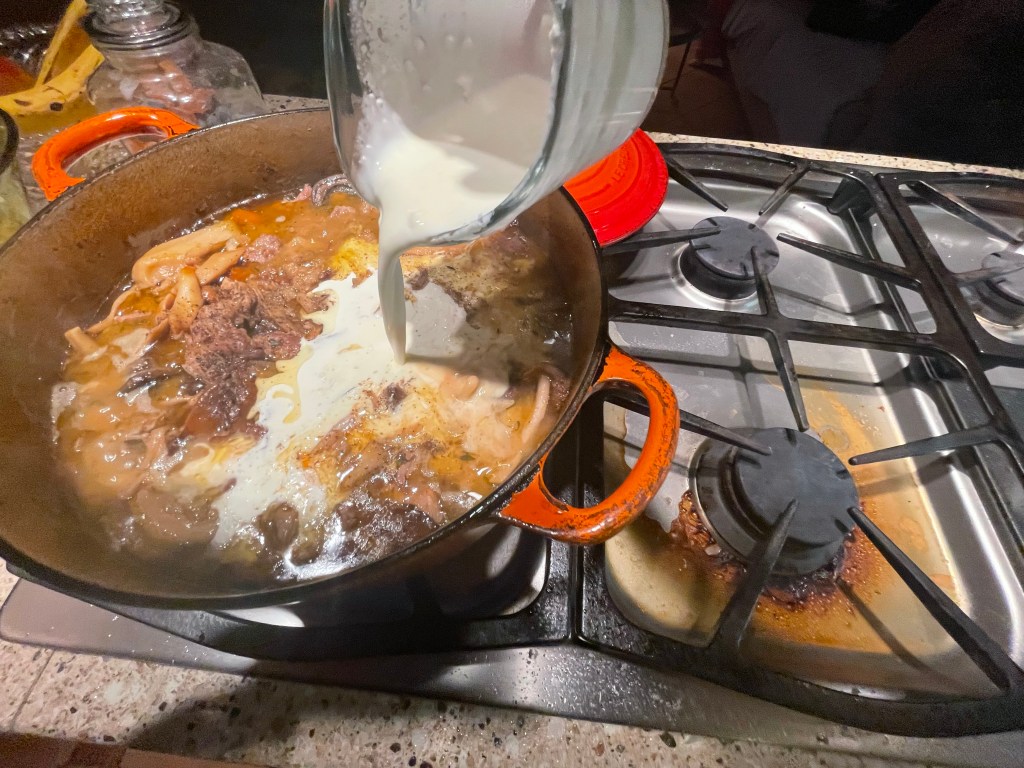
Stir thoroughly.
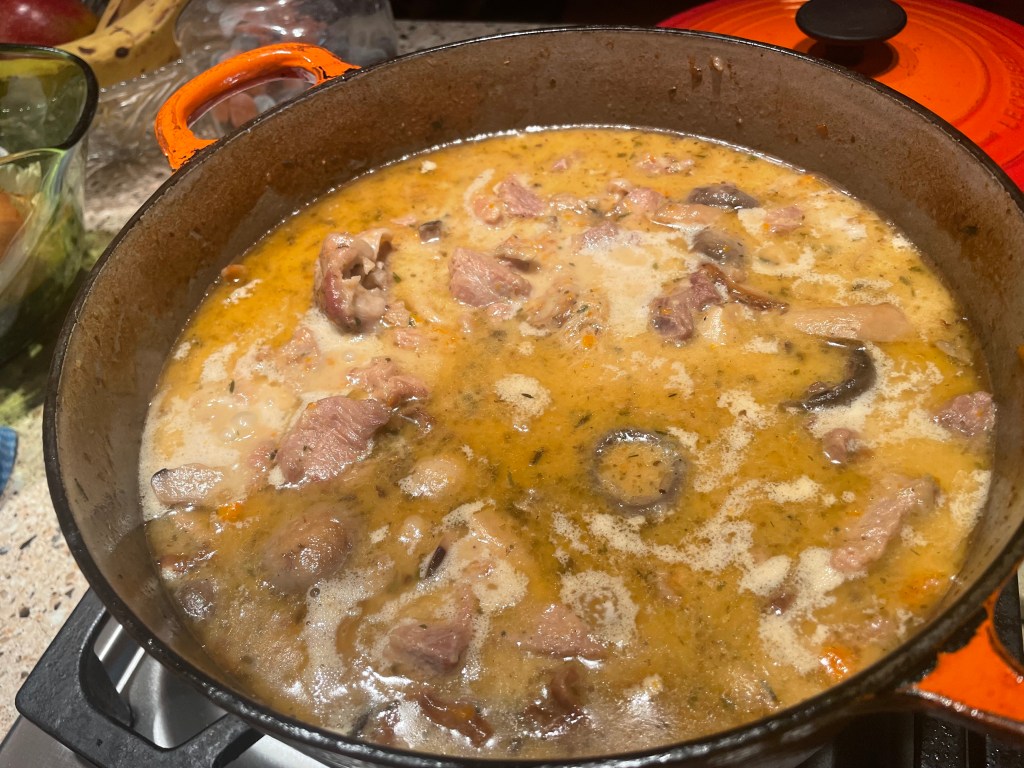
Ready to go back into the oven for a last quick cook.
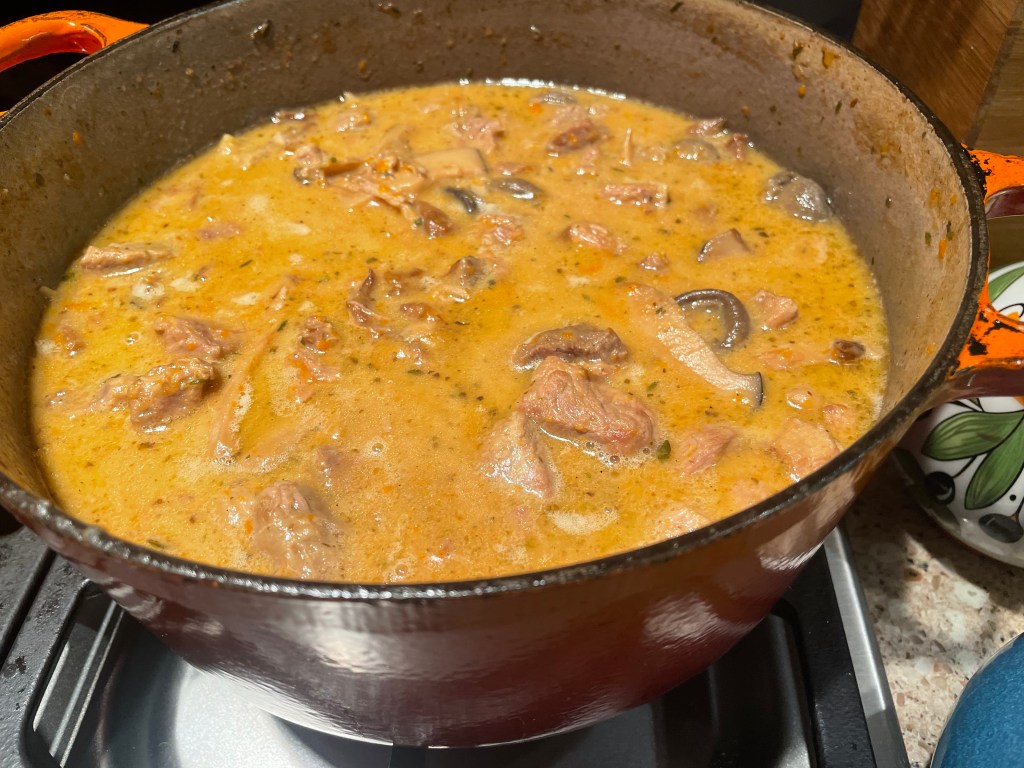
Al done!
Placki Ziemniaczane (Potato Pancakes)
Makes 6 large placki, 12-15 small ones.

Ingredients:
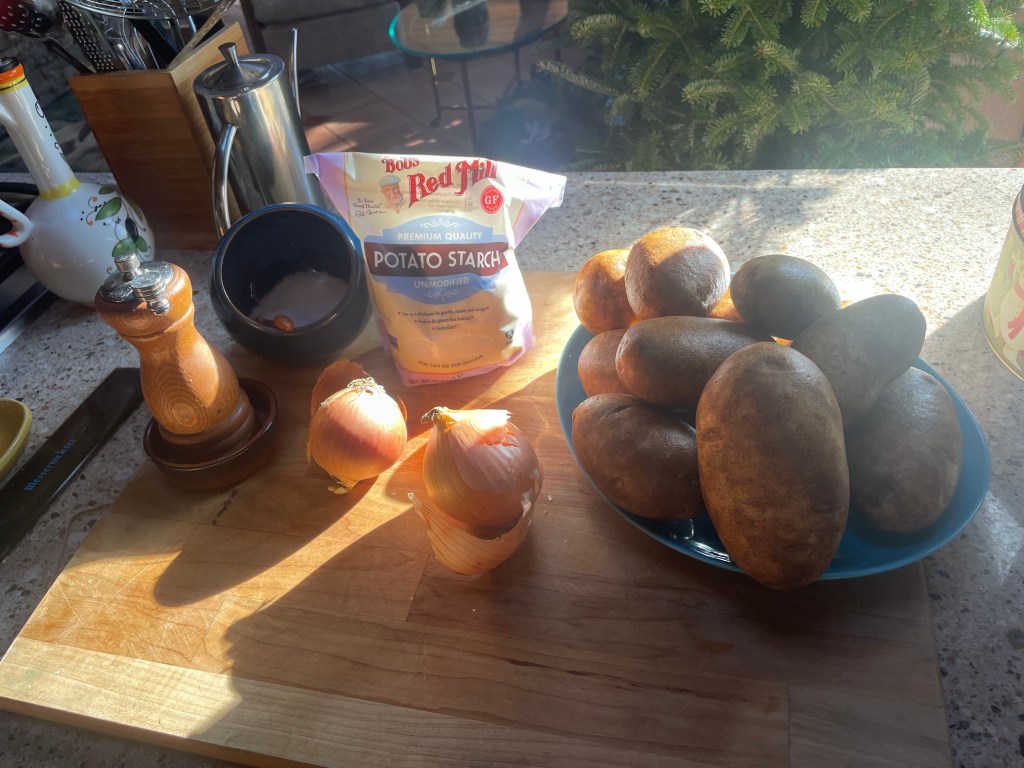
2.5kg/5lb Yukon Gold or your preferred potato, washed, peeled, and roughly chopped
2 yellow onions, peeled and roughly chopped
2 eggs
10g/2tsp kosher salt
Several good grinds of black pepper
30g/2tbsp potato starch – optional, based on the starch level of the potatoes that you use. I almost always add it.
Method:
- Working in batches, place potato and onion chunks into a food processor and process until you get a smooth, only slightly grainy paste.
- Scoop this mixture into a clean dish towel set over a sieve that is, in turn, set over a bowl.
- Drain, gathering the dish towel around the vegetable mush and squeezing out as much liquid as you can. Leave this liquid to sit in the draining bowl, undisturbed. Depending on the starch level of your potatoes, there may be a fair bit of potato starch that settles out at the bottom of the bowl.
- Place the drained potato-onion mix into a large bowl, add eggs, salt, and pepper. Mix well.
- Return to your draining bowl. Very gently pour the liquid out and examine the bottom. If your potatoes were sufficiently starchy, there will be a cream-colored sludge covering the base of the bowl. Scrape this out into your potato-onion batter and mix. If there is little to no potato starch in the bowl that you drained the vegetables, then go ahead and add the 2 tbsp potato starch into your batter.
- Place a pan over medium-high heat and add a good glug (2-3 tbsp with the option to renew) of neutral cooking oil. When the oil is shimmeringly hot, ladle in one sixth of your batter into the hot pan. Gently tip the pan and spread the batter around until it is a round flat pancake. Fry, enjoying the smell and sizzle, for approximately 3 minutes. When you see the edges turning crisp and golden, and the top of the pancake starting to look a little set, bravely turn the whole cake over and fry the other side for another 2-3 minutes. Remove to a rack placed over a paper towel to briefly drain, and then place in a warm place (like an oven set to the lowest possible setting) until the rest of the pancakes are fried and you are ready to serve.
- Add oil as needed – it will help the potatoes crisp up. Repeat with the rest of the batter to fry a total of six large pancakes.
- These really are best freshly fried. But, if needed, you can revivify them (no diamonds needed!). Place in a 170C/350F oven for 10-15 minutes to crisp up.

Clean and peel the potatoes and onions.
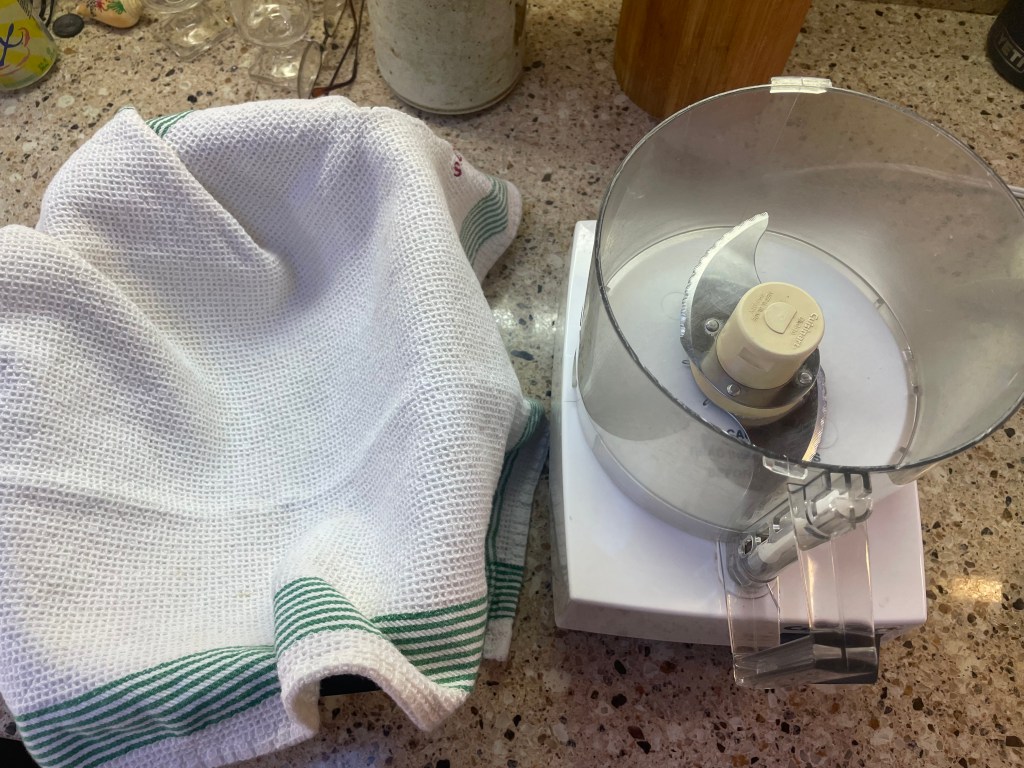
Set up the processing and draining station.
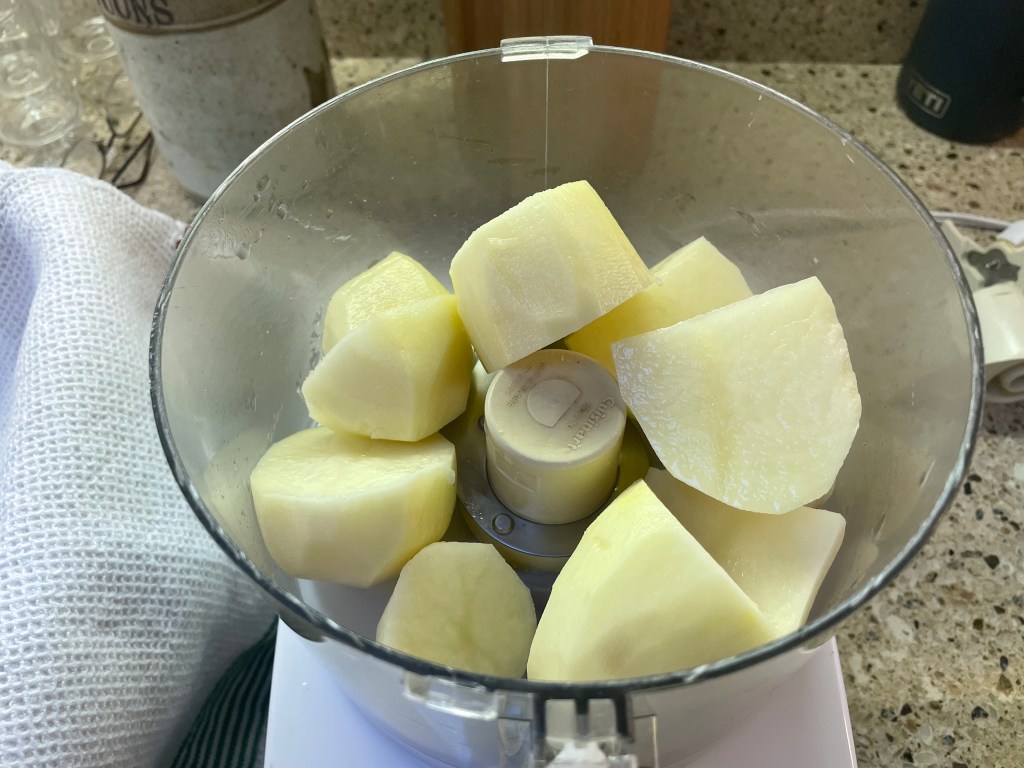
Vegetables go in the mixer.

Process into a mush.
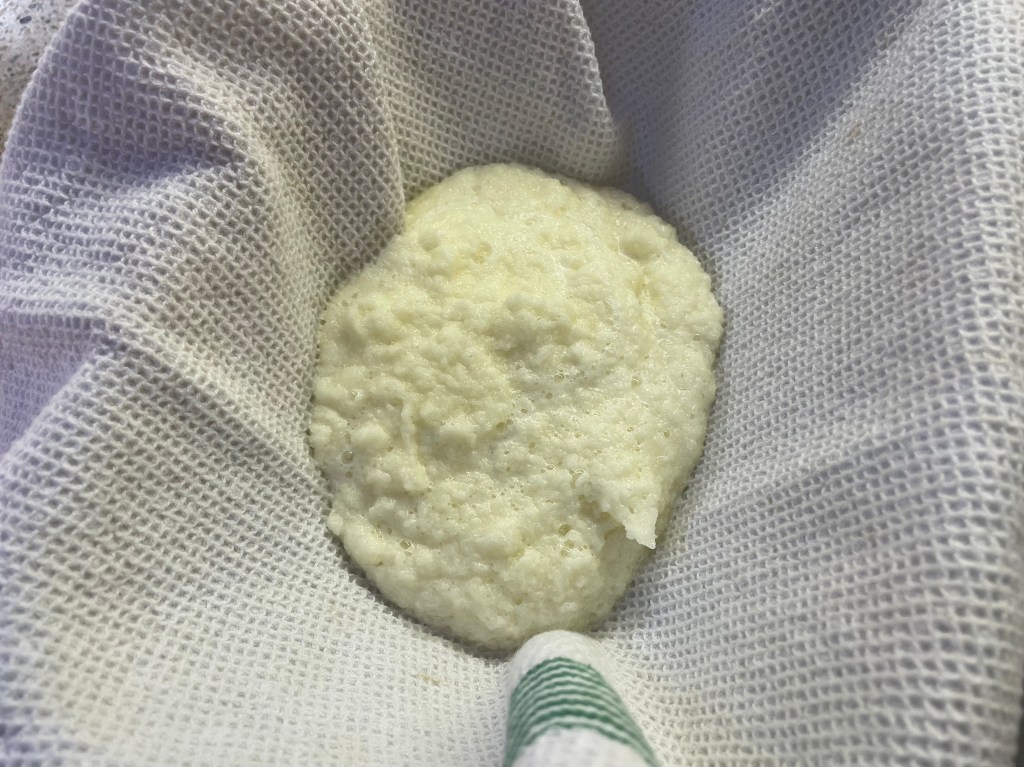
Drain and repeat.
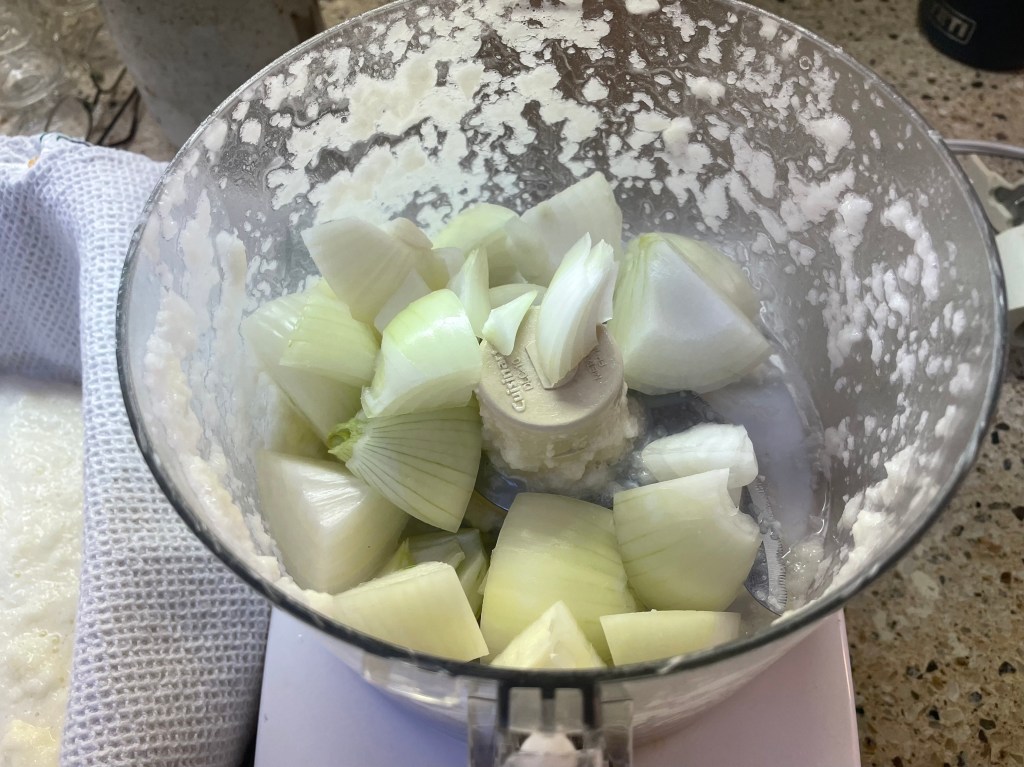
This time with onions.

Squeeze out as much liquid as possible.
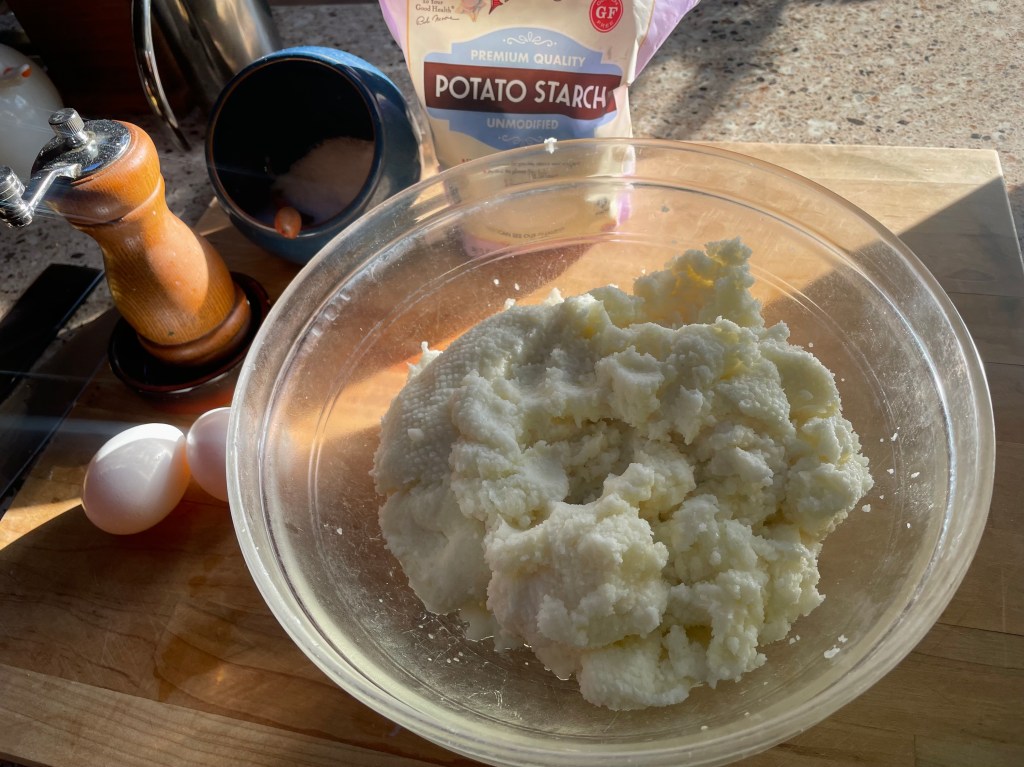
Transfer the drained potato/onion mix into a bowl.

Add potato flour.
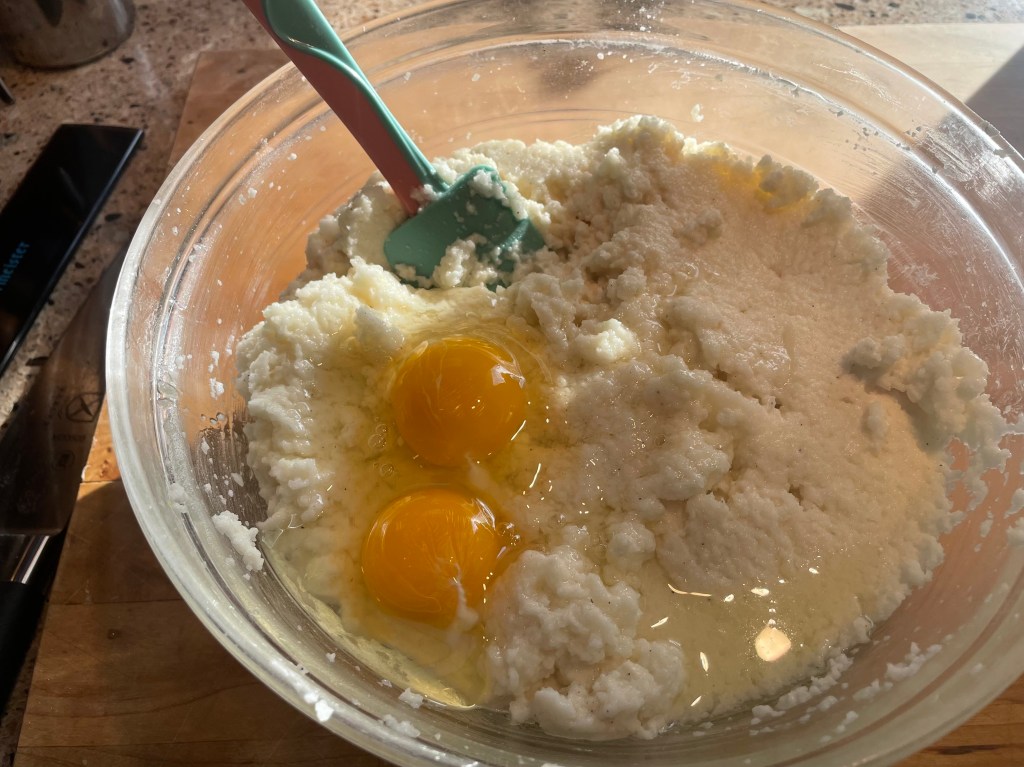
Then the eggs.
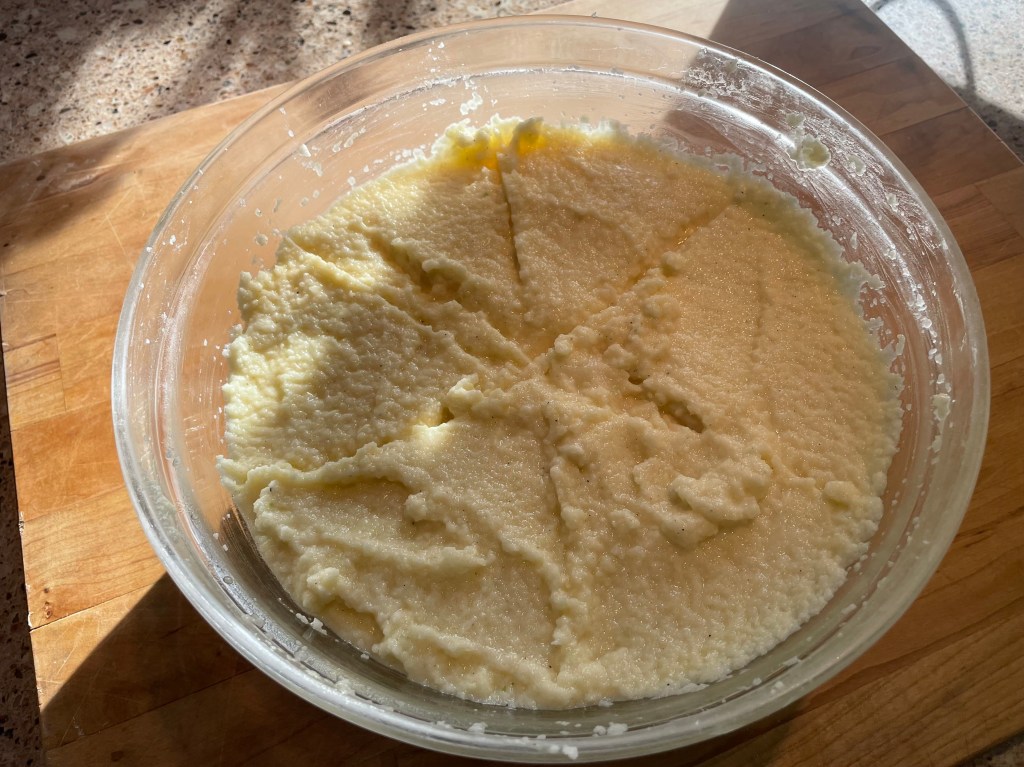
Batter ready and roughly divided for frying.
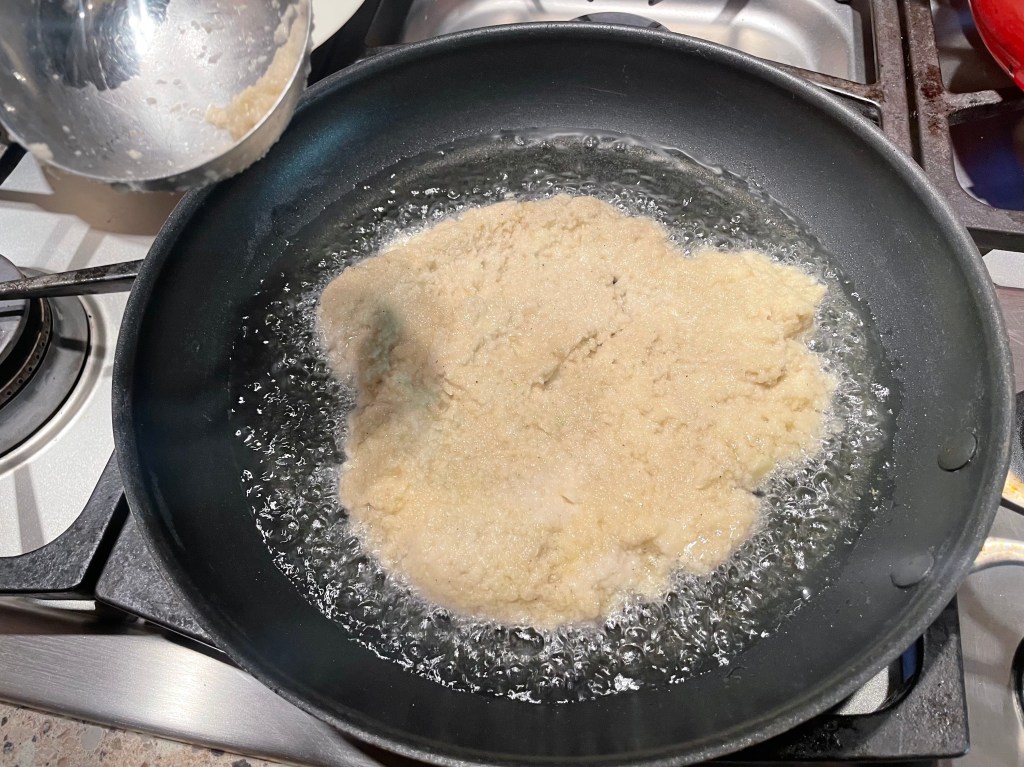
First portion goes in the pan.
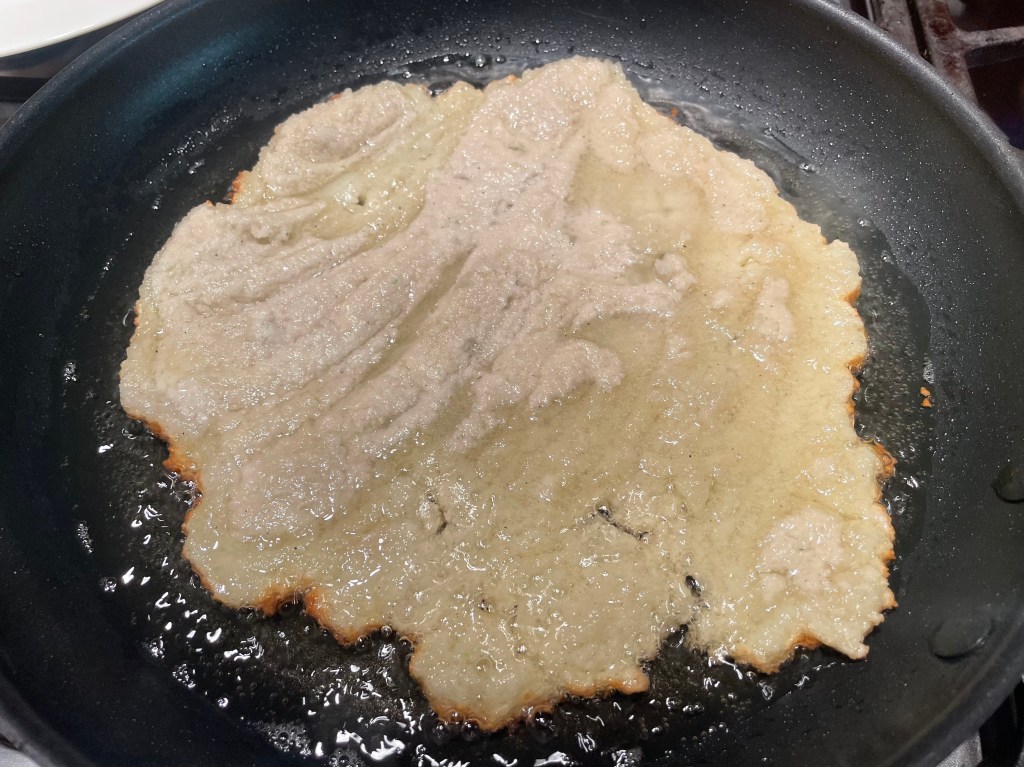
When the edges start to turn golden and the top is beginning to set, it is time to flip.

So pretty!
Putting it all together:
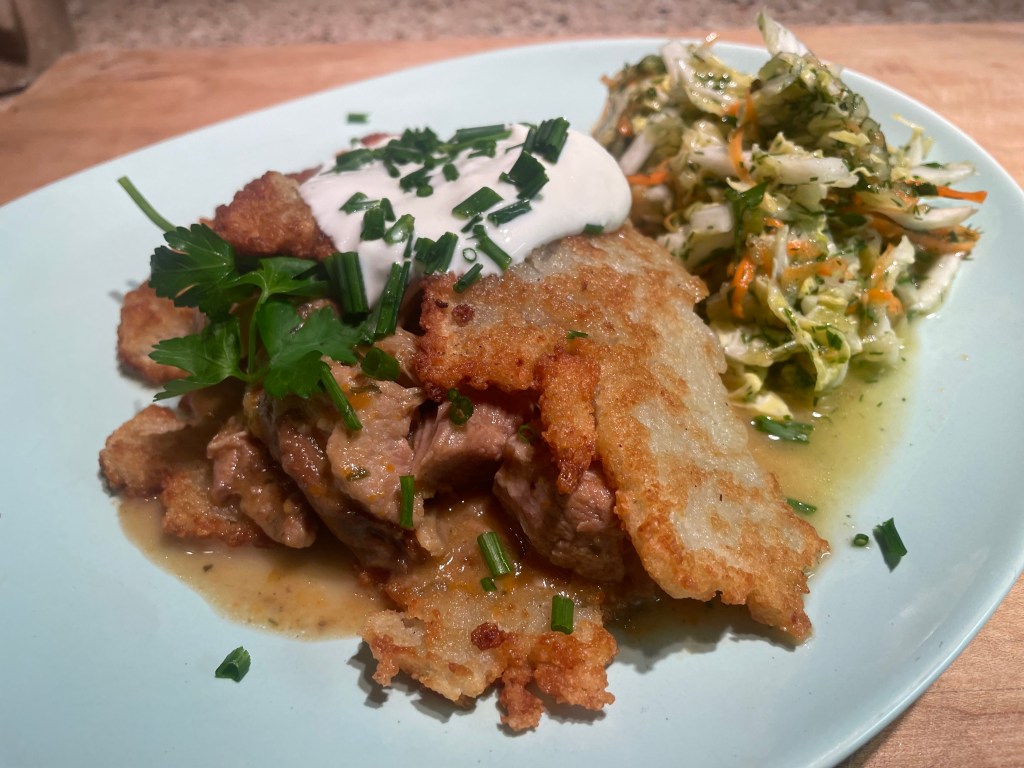
- Place a potato pancake on your plate, and then ladle on a good amount of stew directly over one half of the pancake. Fold the pancake over the stew like a giant potato taco. Top with sour cream and chopped green herbs (chives are a particularly good match here).
- A refreshing, high-acid salad is good here. I like a sprightly slaw with crunchy cabbage, tart shredded apple, lemony-garlic dressing, and handfuls of dill. But if you, like Amber and our Trio, just had a challenging night of battling Undead in a graveyard, you should feel perfectly justified to forego any ceremony. Or garnishes. Just used torn up pieces of pancake to scoop the stew directly out of your cauldron. I mean, pot. Enjoy!


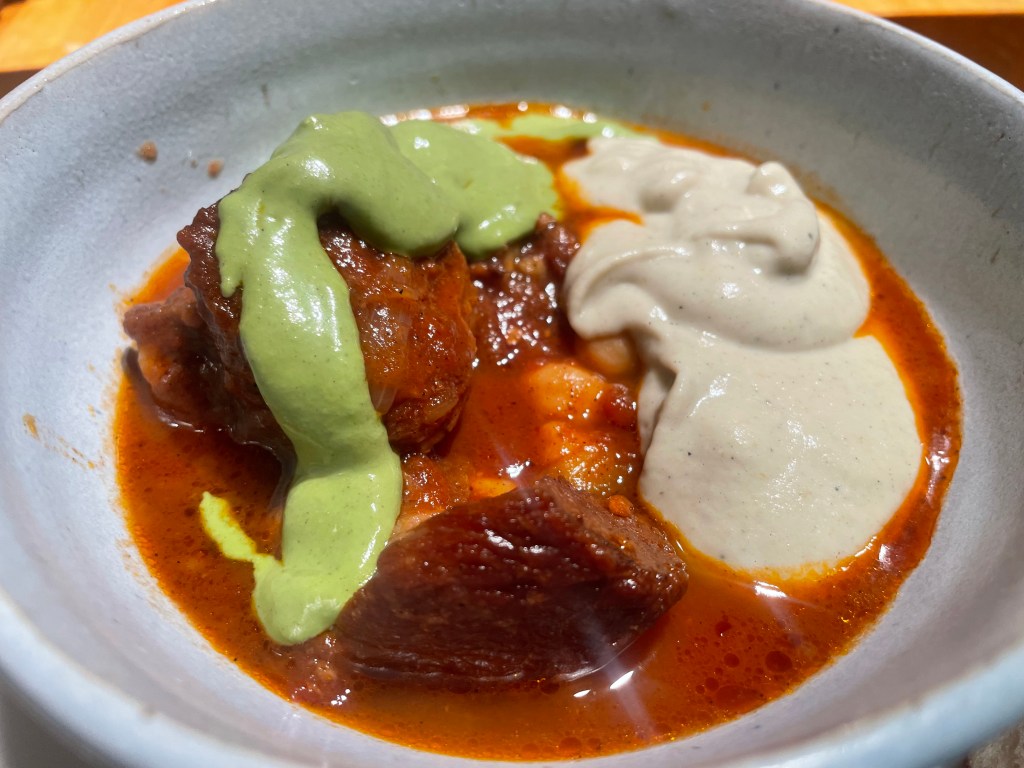
Vaikner’s Magically Improved Stew or Goat Stew with Creamy Eggplant Sauce.

Amber’s choice of favorite spice had Vaikner turning Aundra’s standard Waterdhavian fare into a Calimshite dish. Given that, in the Realms, rightly or, you know, wincingly stereotypically, Calimshan seems to be a pastiche of an Aladdin-style version of the Middle East,* I turned to Claudia Roden’s The New Book of Middle Eastern Food for recipe ideas.
Mostly because, I’m not going to lie, I had bought a big pack of goat meat on discount at H-mart and I was really excited to use it. I ended up combining two recipes, substituting the lamb that each called for with my goatey-goat stew chunks.
The first was a Tunisian version of a meat and eggplant stew known as Lahma bi Betingan or Buraniya. I used this as the base recipe, but left out the eggplant and added in chickpeas and harissa as a additional seasoning.
Then I turned to a very interesting-sounding Turkish dish called Hünkâr Beğendi. A lamb stew very similar to the Buraniya but consisting solely of meat cooked in a tomato-onion sauce. And accompanied by a creamy eggplant concoction. Which, according to the lovely recipe back-story provided by Claudia Roden (I highly recommend her cookbook, it is full of such charming tales) elevated it to a festive dish unique enough to be called Sultan’s Pleasure.
So, a Tunisian tomato-based goat stew, served with a Turkish eggplant-cream sauce. Hopefully not a complete travesty: I just greedily wanted to try components of both of these dishes. If there is anything too odd in this mix…well, I will just blame in on Vaikner’s magic being a bit messy when used for culinary purposes. Heehee.
* The creator of the Realms, Ed Greenwood, has stated repeatedly and emphatically that he is against using real world analogs for places in Faerun but other authors developing these regions in later supplements have painted with brushes colored very strongly by locations and cultures in our own world.
Serves 8-10
Ingredients:
For the stew:

400g/2 cups dried chickpeas, rinsed and soaked
30ml/2 tbsp vegetable oil
1kg/2lb goat or lamb meat (cuts with a decent fat and collagen contents that lend themselves to long stewing are preferred: neck, shoulder, shank)
10g/2tsp sea salt
3 medium yellow onions, peeled and chopped
4 garlic cloves, peeled and minced
10g/2 tsp ground cinnamon
2.5g/1/2 tsp ground allspice
5-10g/1-2 tsp harissa
830ml/28oz can tomatoes
1L/4 cups broth (chicken or vegetable is fine)
For the creamy eggplant sauce:
1.5kg/3lb eggplants (two large)
Juice of 1 lemon
60g/4 tbsp butter
45g/3 tbsp all-purpose flour
500ml/2 cups hot milk
Salt and white pepper to taste
2.5g/1/2 tsp freshly grated nutmeg
125g/1/2 cup freshly grated Kasseri cheese (this Greek cheese is a semi-hard product traditionally made from a blend of sheep’s and goat’s milk. I was not able to find it and substituted mozzarella and feta. Other recommended options include white cheddar, provolone, Halloumi, and Pecorino Romano. I suppose it varies on whether you are in need of something that melts well, or are more interested in the sharp flavor profile. Or both. I wanted both).
Method:
For the stew:
- Rinse your chickpeas thoroughly to remove any dust and debris. Place in a bowl, cover with cool water, and allow to soak overnight. Drain off the soaking water before using. They will end up looking plump and tempting – very much like the peas you get from a can. But do not try to eat them at this point. You will break a tooth. They still need a good long simmering, during which they will become pleasantly crumbly-soft and soak up all of the flavor of the stew (the two big reasons why I prefer to start with the dry and not the canned chickpeas: I’m fairly addicted to the resulting texture and flavor. But you can definitely also used canned chickpeas in this recipe. Drain and rinse your desired amount, and pop them in during the last 15-20 minutes of stew-making).
- If you have time and remember to do it, this would also be a good time to generously salt your pieces of meat. Once seasoned, they can be spread out over a rack that is placed over a baking sheet to catch any juices. And kept in a cold place (fridge or, very conveniently at this frigid time of year, a freezing cold garage), uncovered, overnight. They will be very evenly seasoned and brown more beautifully if you do this optional extra step.
- When ready to cook, place a shelf in the middle of your oven and preheat to 160C/320F.
- Heat a Dutch oven or other heavy, deep pan over medium-high. Add oil and heat until it is just starting to smoke. Working in batches so as not to overcrowd your pan, brown the meat. If you did not previously salt it, you can season it while it sizzles away. Give each side of each piece of goat several minutes to build up good color. When each batch is nicely burnished and developing a good crust, remove to a plate and get on with the next meat lot.
- Once all the meat has been browned and set aside, put the chopped onion into the Dutch oven, scraping up all the delicious bits of browned meat that may be left on the bottom. Decrease the heat to medium-low and allow the onion to sauté slowly until soft and golden.
- Add the garlic and fry for thirty seconds, just until fragrant. Then add the cinnamon, allspice, and Harissa. Finally, throw the tomatoes into the mix, increase the heat to high, and fry for 2-3 minutes. They may splatter and spit but you do want to give the tomatoes a little bit of a roasty flavor before reintroducing the meat.
- Add the meat and any juices that it may have exuded back into the pot. Stir in the chickpeas (if using the dried and soaked version). Pour in enough broth to cover and stir well.
- Bring to a simmer on the stovetop and then place in the oven. Cover most of the way – move the cover just to one side to leave about 2cm/1 inch of a gap between the top of the Dutch oven and its cover.
- Braise for 3 hours or until the meat is tender and the chickpeas are cooked. This can be eaten right away or, even better, left to cool overnight and then reheated the next day. The flavors (Goat! Garlic! Harissa!) will really sing.
Serve with creamy eggplant sauce (see below), chopped cilantro, and the starch of your choice (warm flat breads, rice, couscous would all work well here).
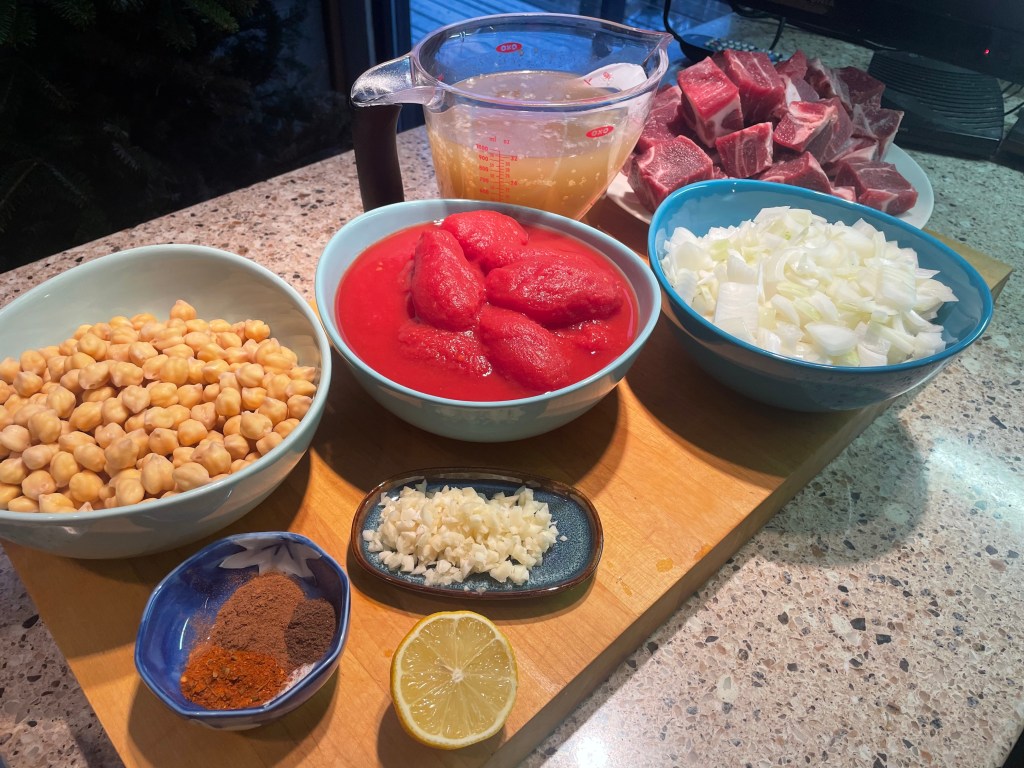
Prepare your ingredients.
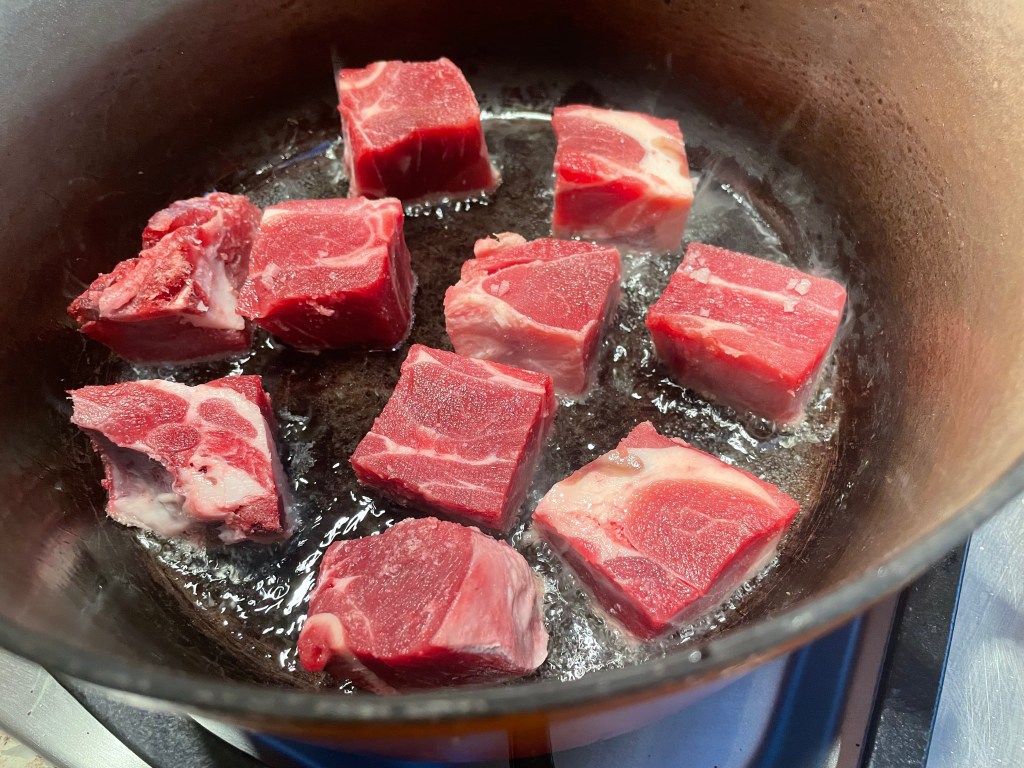
This goat looks too perfect to be real, right?

Brown patiently.

Introduce onions to the mix.
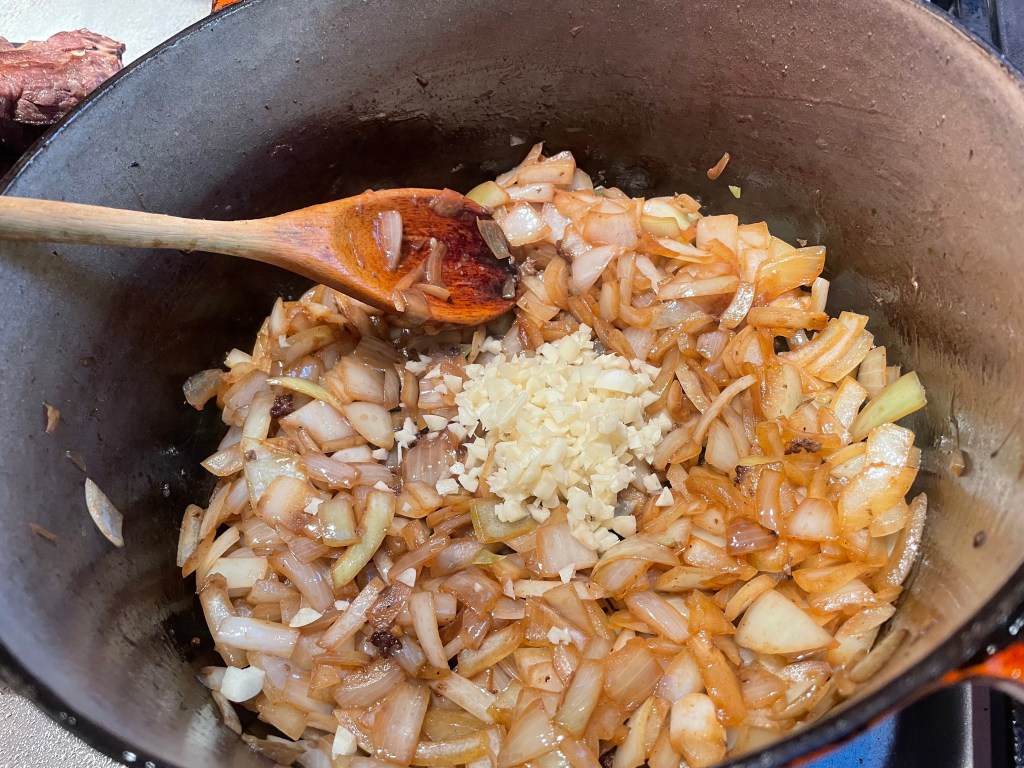
When nice and brown, toss in the garlic.
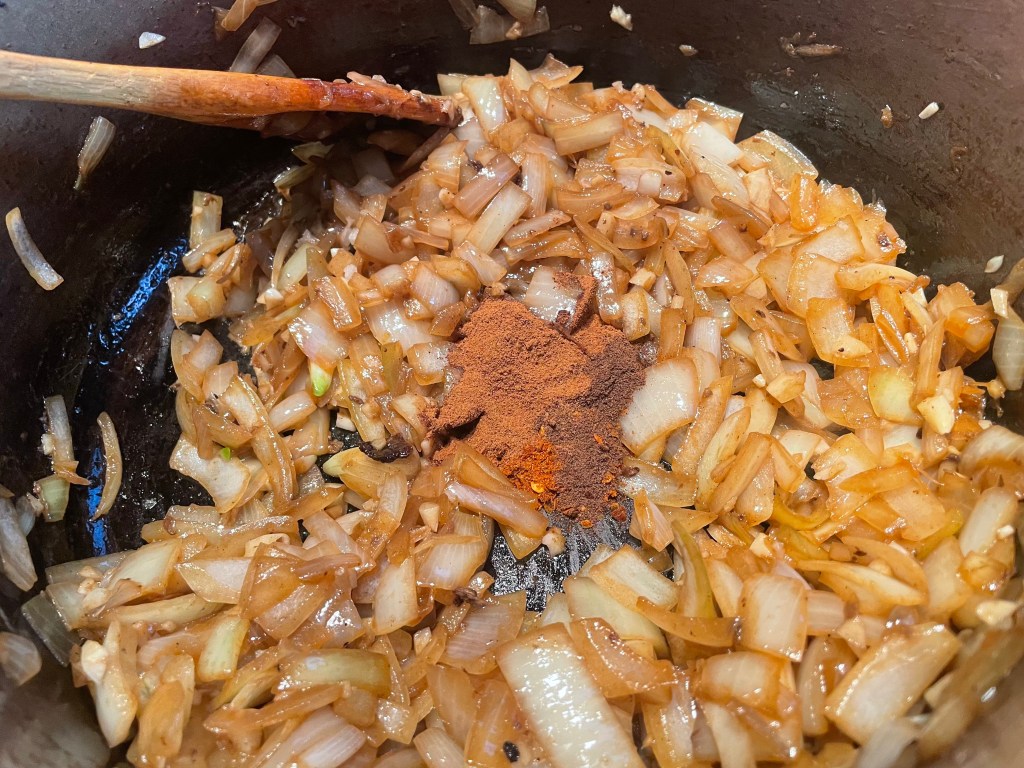
And the spices.
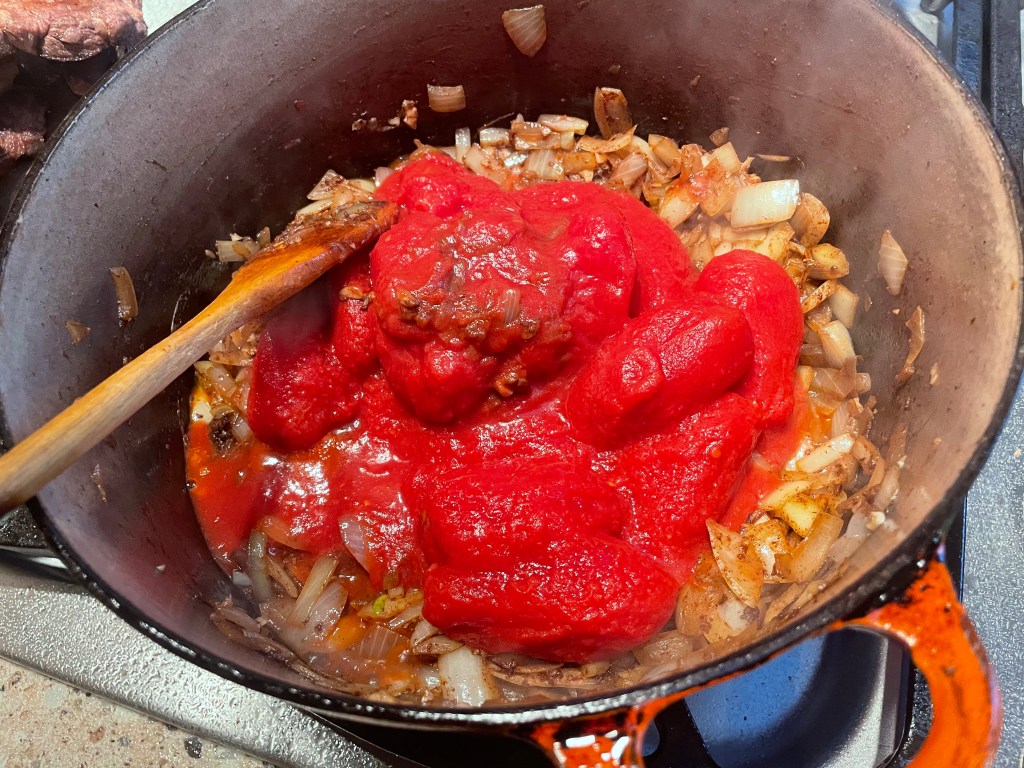
Tomatoes are next.
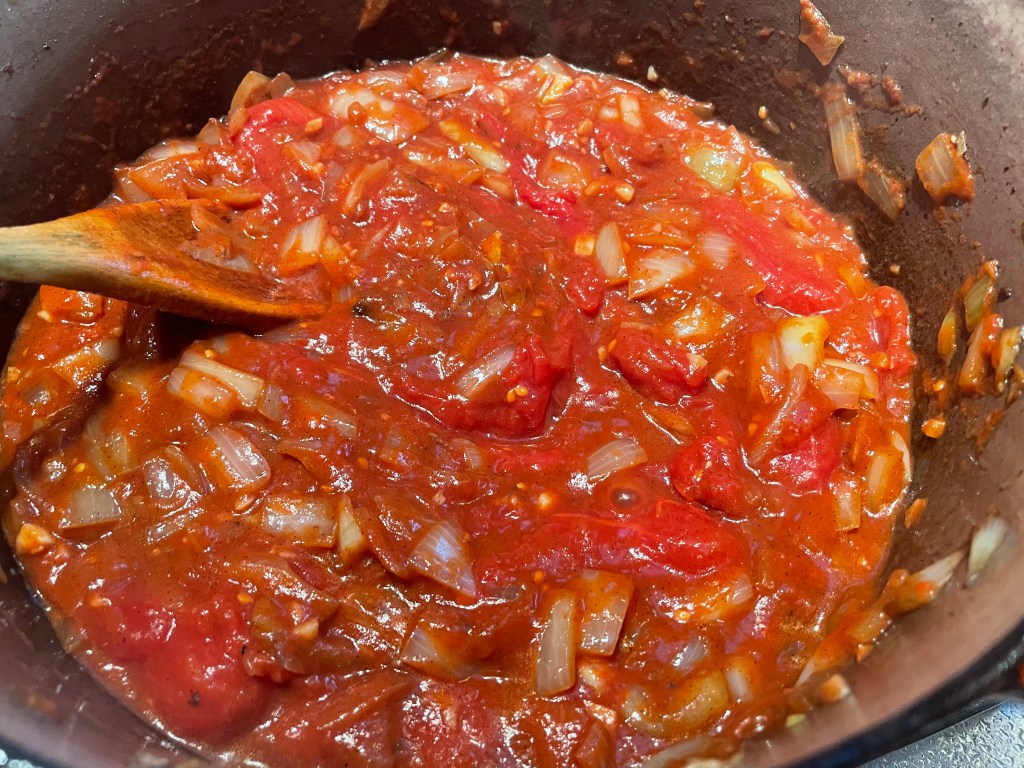
Cook them down until portions of the dish are starting to stick and caramelize.
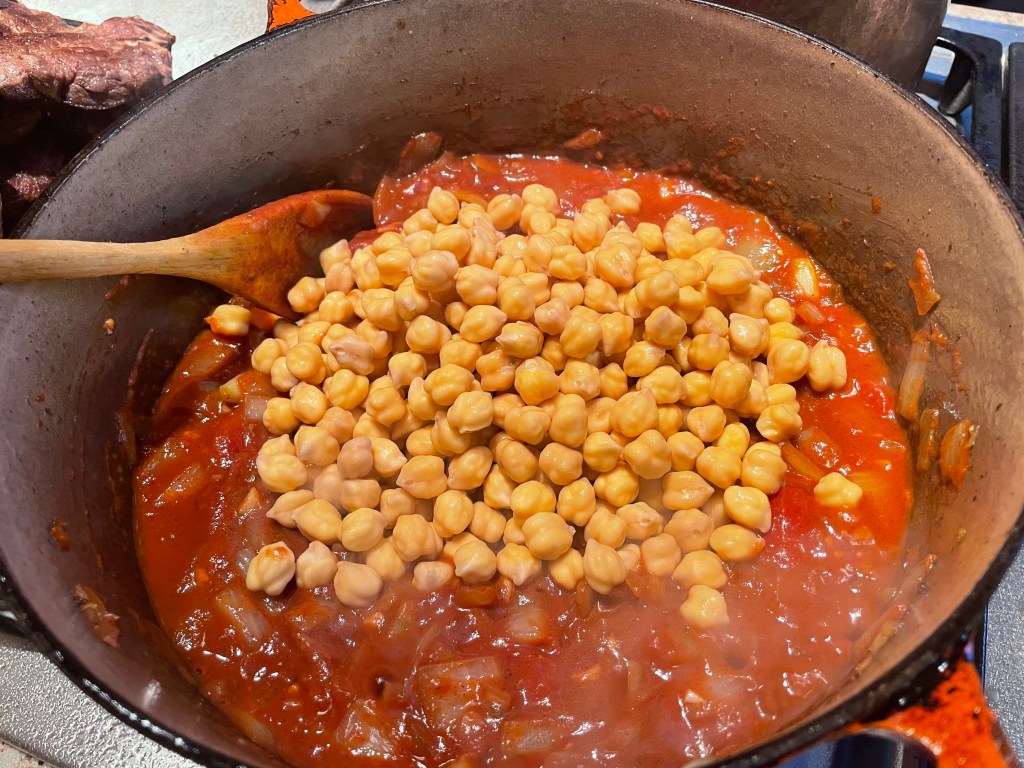
At this point it is time for the chickpeas.

And the meat.
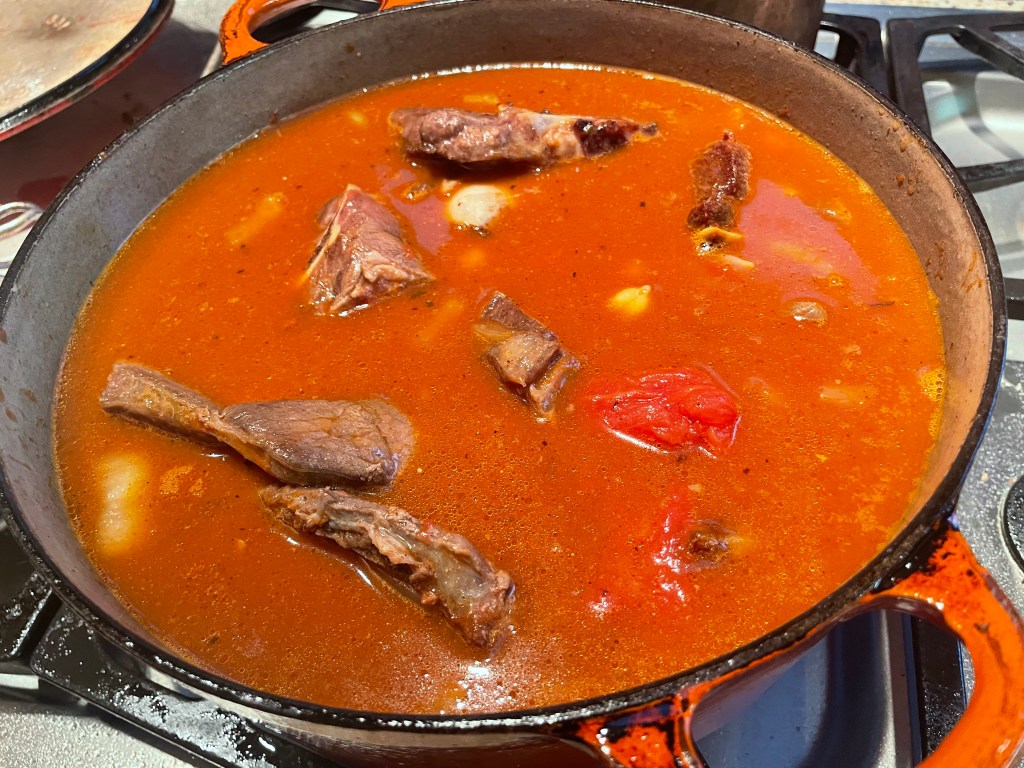
Pour in enough stock to cover.

Pop in the oven and go relax with your beverage and activity of choice.
For the Eggplant Sauce:

- First, roast your eggplants. I have at my disposal, for the first time ever, a gas stove (this house was built by my parents-in-law in 1971 and so, while I humbly rejoice over the power and fine control that the gas stove gives me, I understand that this would not now be the environmentally sound choice for a kitchen). So I used naked flame to blister and char my eggplants’ skin until I legitimately felt guilty about how traumatized they looked. I mean, until they were smoky and aromatic and beginning to soften. Then I placed their limp, seared forms on a foil-lined baking sheet, poked them with a fork several times for good measure, and finished them off in a very hot oven (230C/450F). This took 15 minutes. At that point they were completely collapsed in on themselves, fragrant, and very soft. If you do not want to mess about with tongs and eggplant torture, just start at the fork-poking and baking sheet step. Roast in as searingly hot oven as you can get to instill as much smokiness as possible into the eggplant. Without pre-charring, this will probably take closer to 30 minutes.
- When cool enough to handle safely, carefully peel the eggplant. And you can stop feeling sorry for it now. It will get its revenge by burning your fingers at this point. Do not worry about getting every fleck of charcoaled skin off. Those little scraps are fine to leave and add flavor. Drop the (mostly) peeled eggplant into a bowl containing the juice of a lemon (this will help keep the eggplant flesh from oxidizing into the grey-brown color of one of the Undead skeletons). Slosh all this together and set aside while making the béchamel sauce.
- In a medium saucepan, melt the butter until sizzling gently. Add the flour and mix thoroughly over low heat until it smells deliciously bread-like (about 2 minutes). Gradually pour in the hot milk, whisking energetically to create a smooth, lump-free sauce. Bring to a simmer and cook until the sauce is thick enough to coat the back of a spoon and indolently refuses to move back into place when you run your finger over said spoon. Season with salt, pepper, and nutmeg.
- Remove from the heat and mix in the grated cheese.
- Drain the cooled eggplant mix in a colander, pressing out as much liquid as you can. At this point, you can pop the eggplant solids into a food processor, process until a fine paste forms, and mix this paste in with your cheese sauce. Or you can (as I did), place the eggplants and sauce together into a powerful blender. This resulted in a silky and creamy purée – I recommend.
- Serve the eggplant cream with the goat and chickpea stew, along with additional herbs, vegetables, and breads of your choice.
Note: This recipe resulted in a rather unwieldy quantity of eggplant sauce. It is versatile though – you can use it as a base for a dip or spread for pita bread. It also works well as a comforting soup: blended along roast squash seasoned with Ras El Hanout, and thinned out with a little broth. Garnish with finely chopped preserved lemons and shower with fresh cilantro to serve.
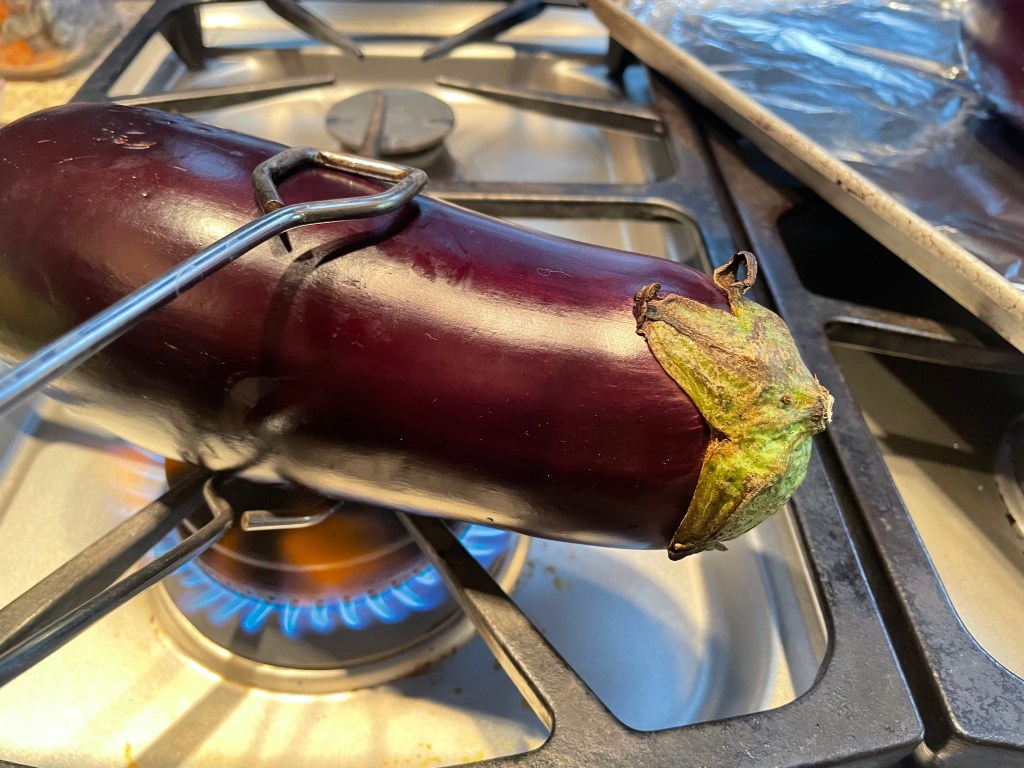
The power of fire.
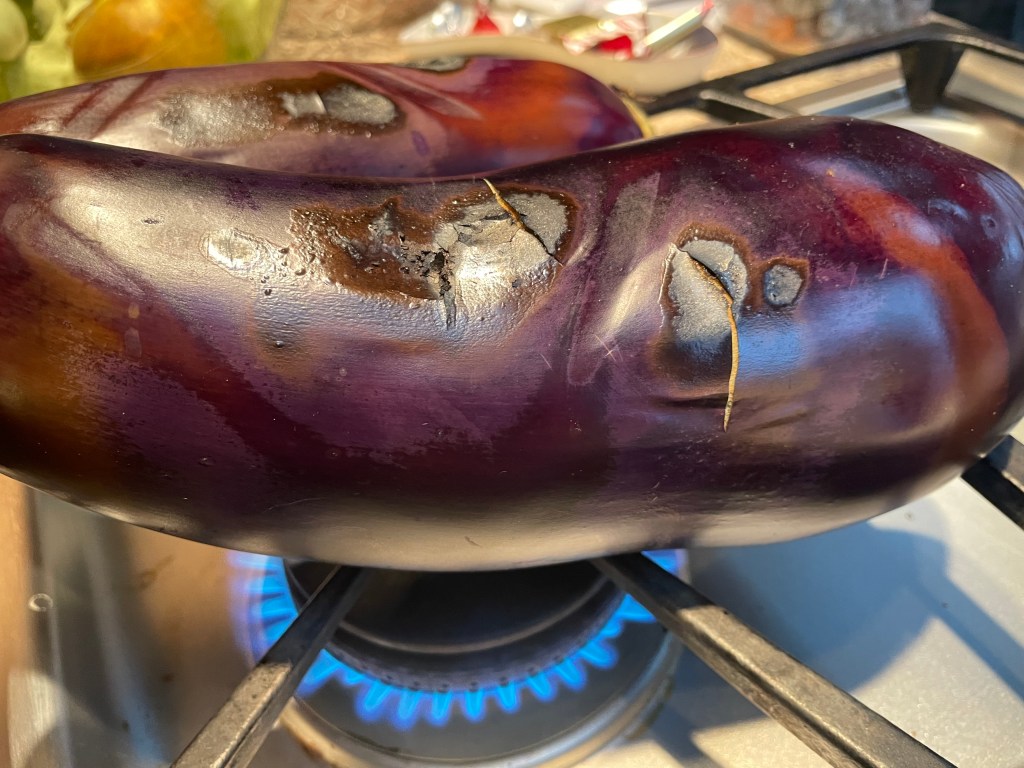
Starting to blister.

Softening and flaking, both good things.
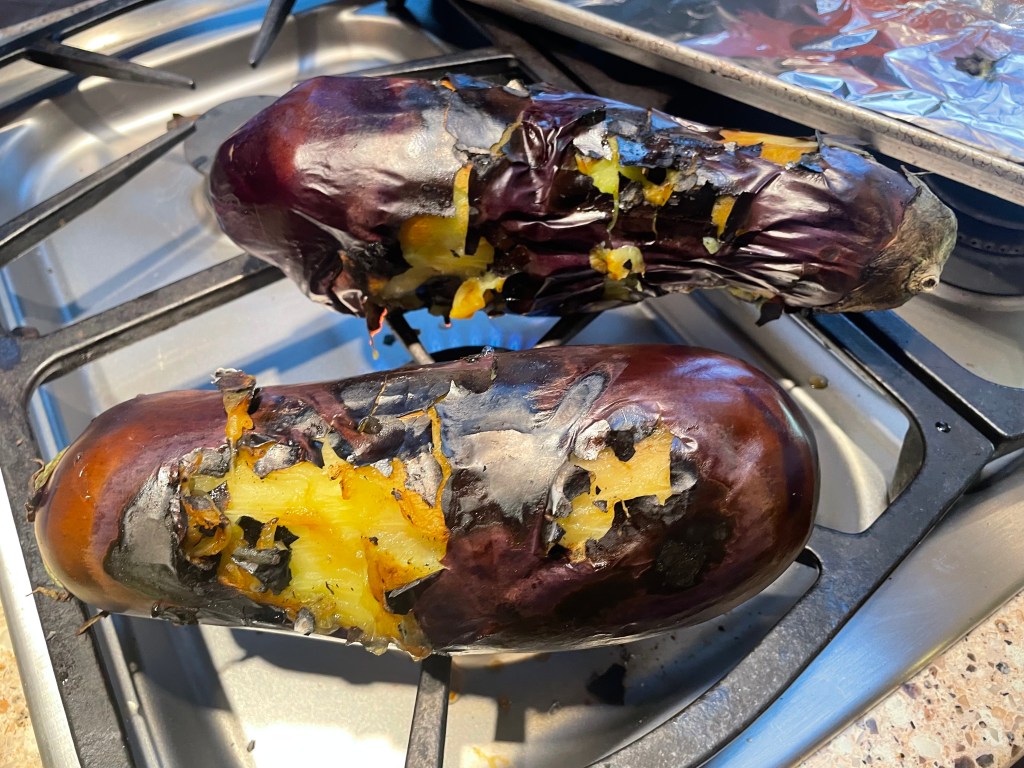
Yeah, I’m just starting to feel bad for the poor little things again…
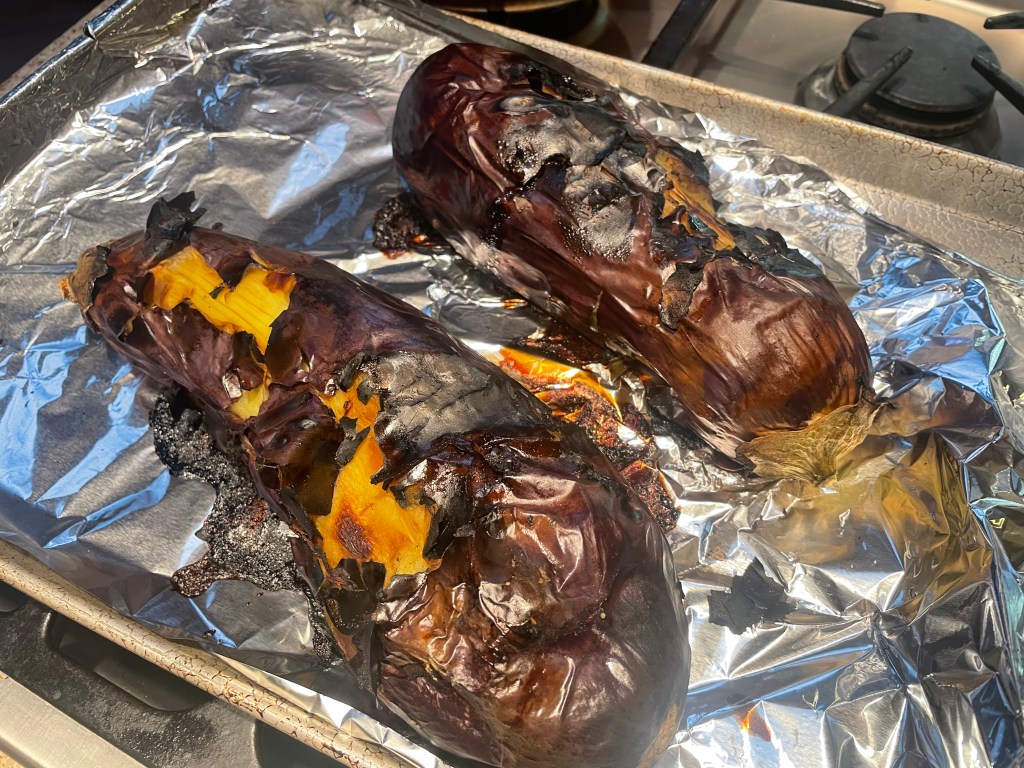
Here they are, fully roasted.

Peeled.
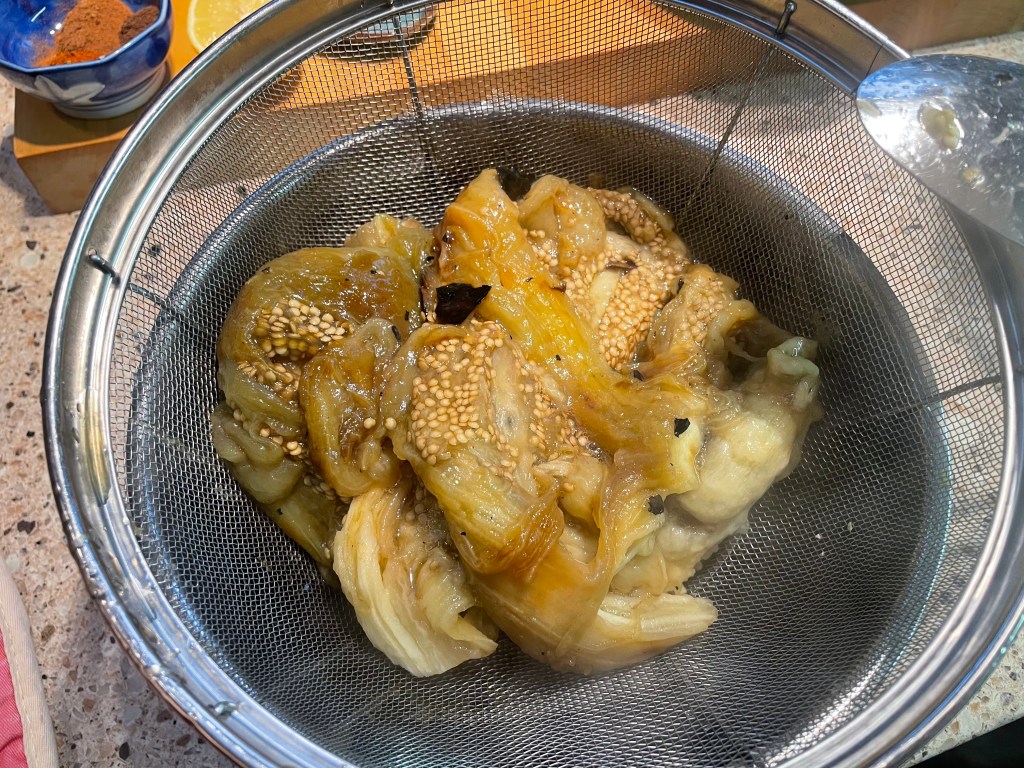
And drained.
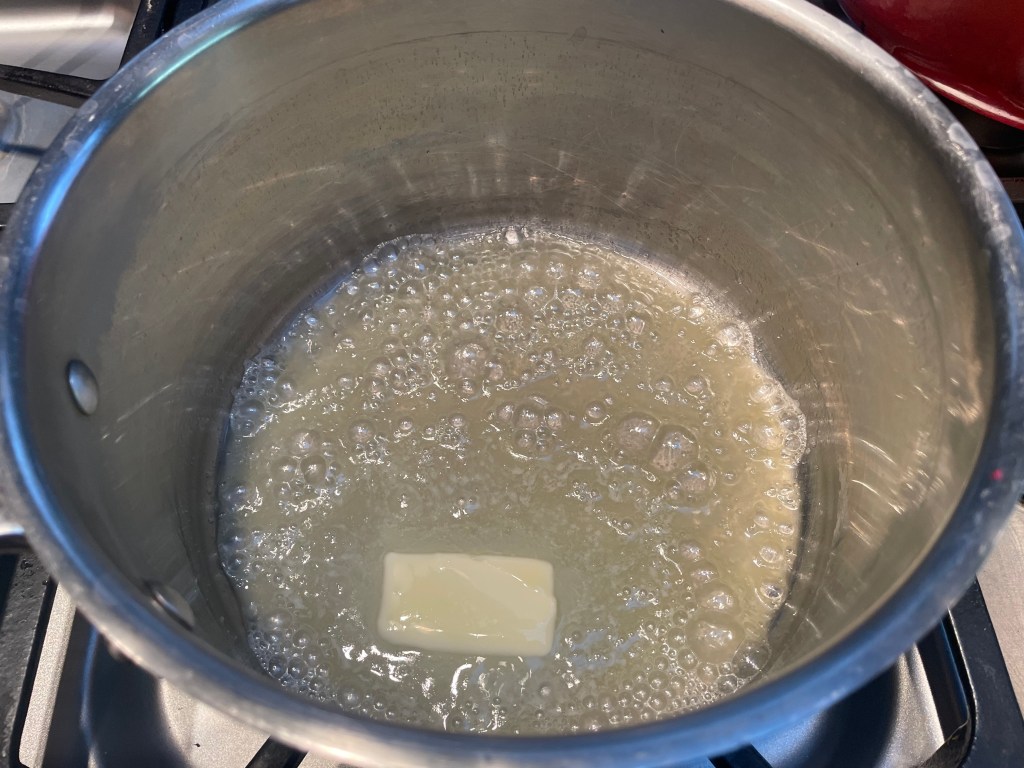
Meanwhile, back at the stovetop, melt your butter.
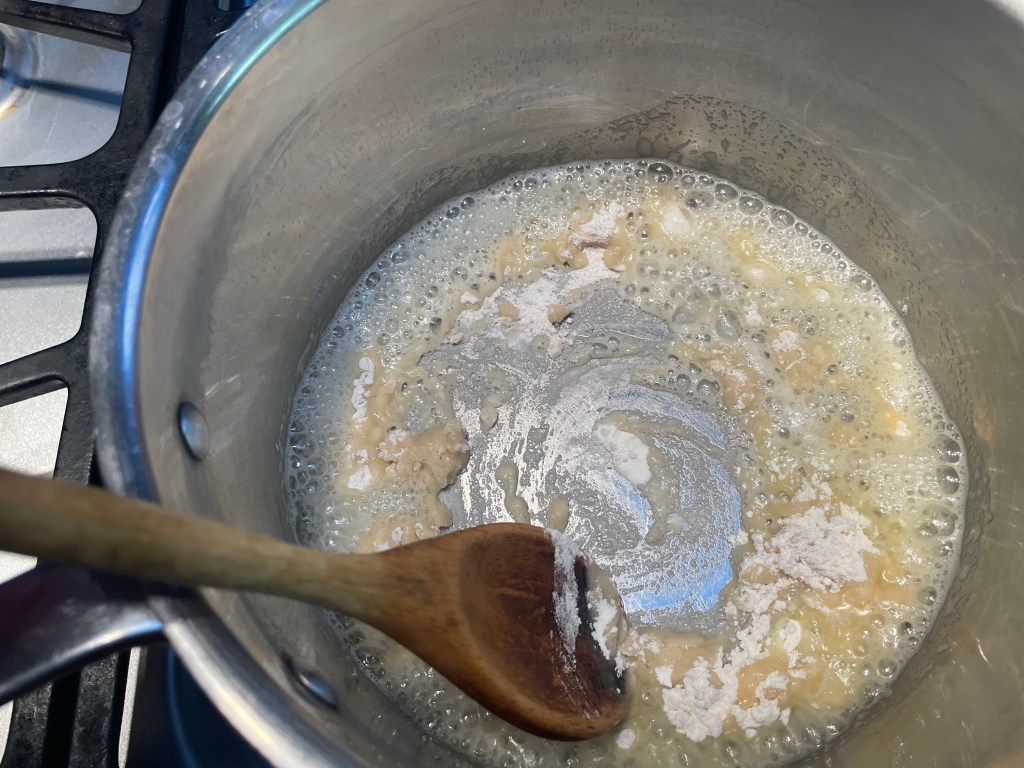
Stir in flour.

Cook until no longer raw smelling.
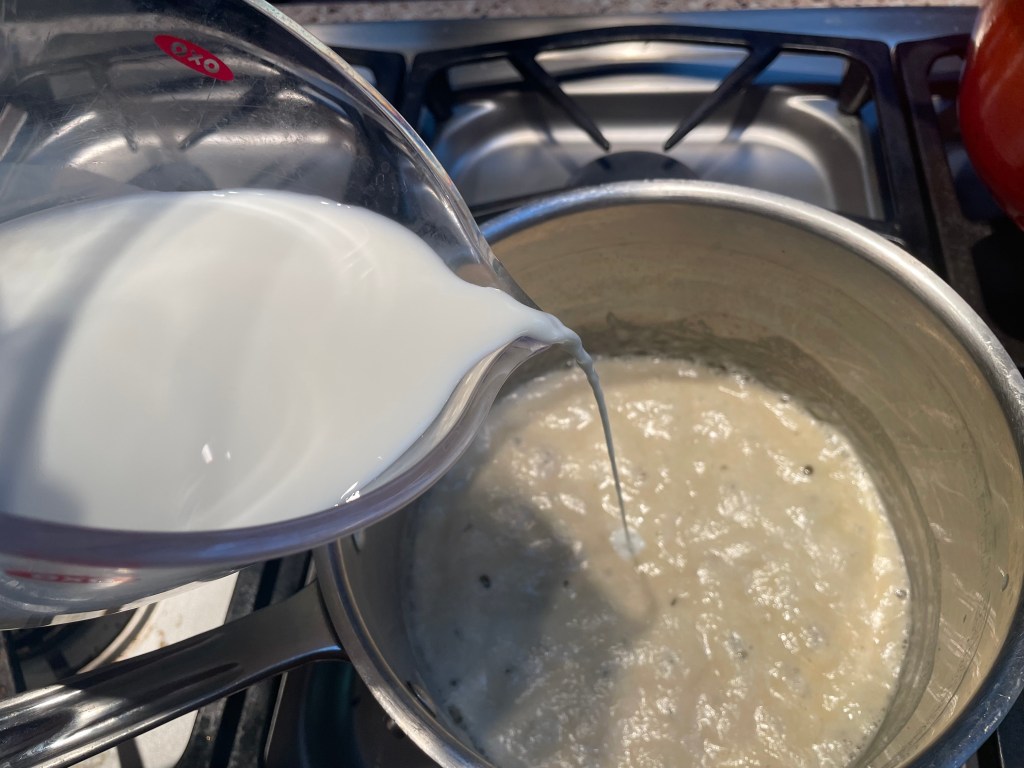
Gradually pour in milk.

Be optimistic, do not give up on your whisking.
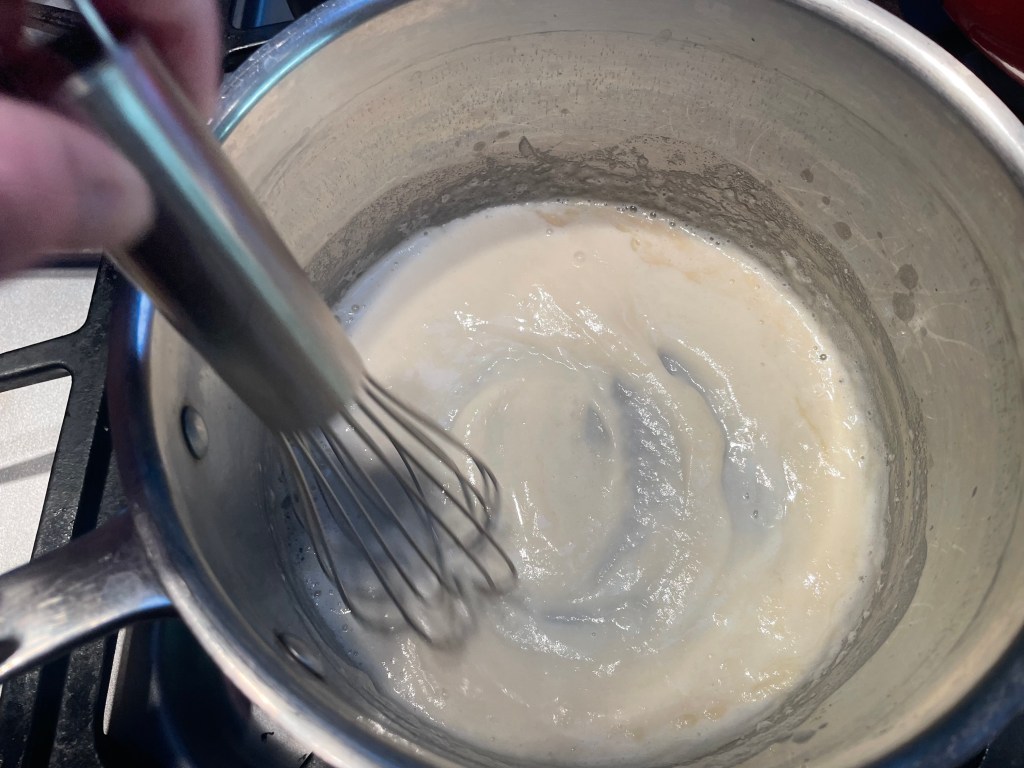
As you add more milk.
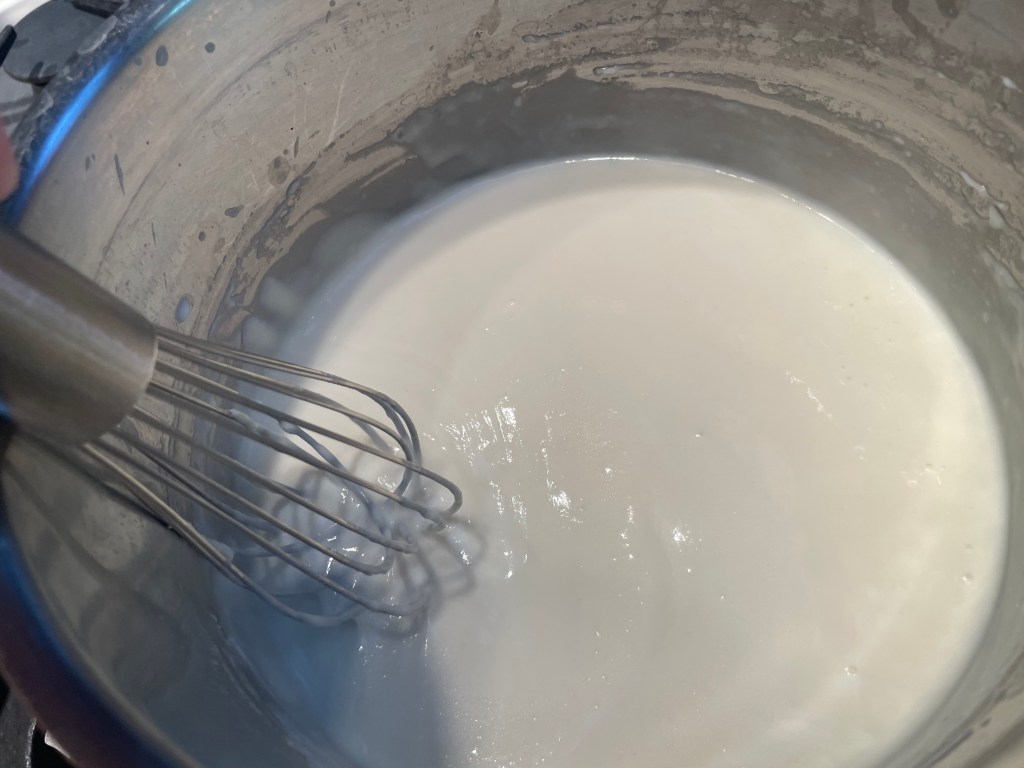
And watch it smooth out into a creamy sauce.
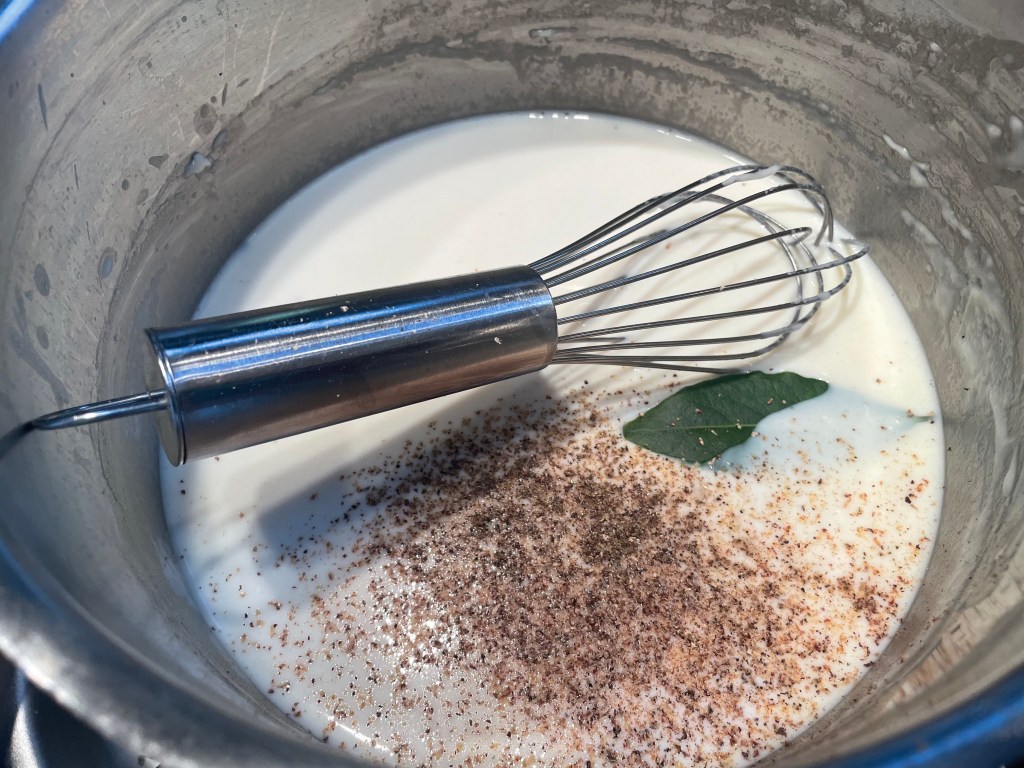
Season.
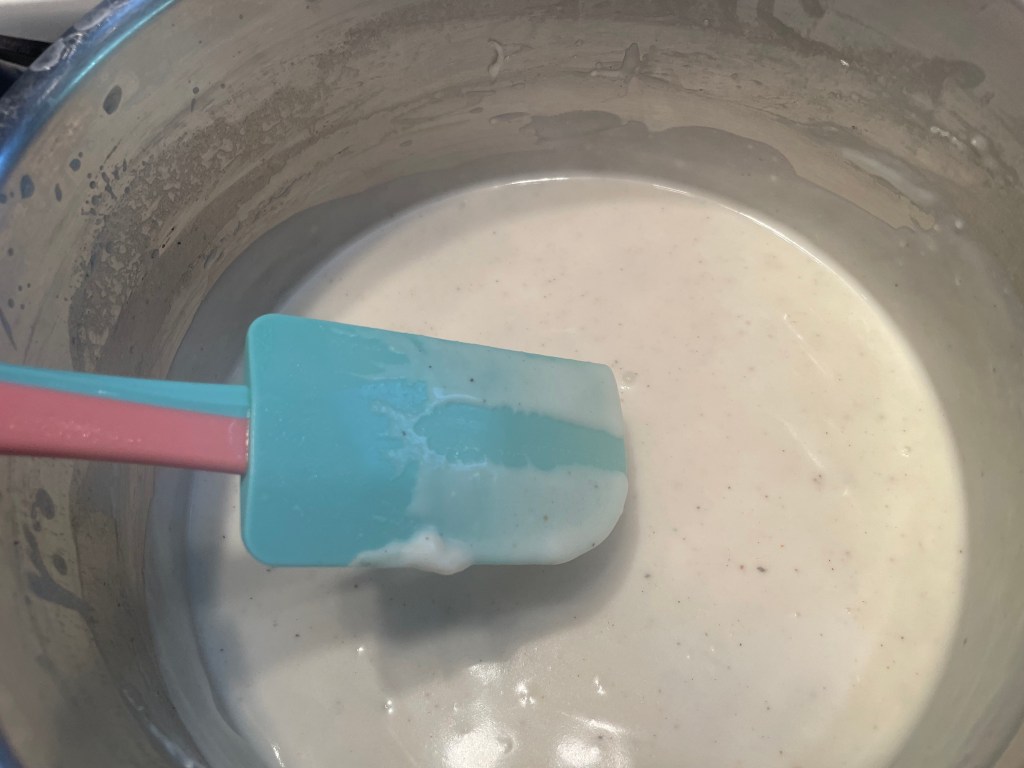
Cook until thickened.
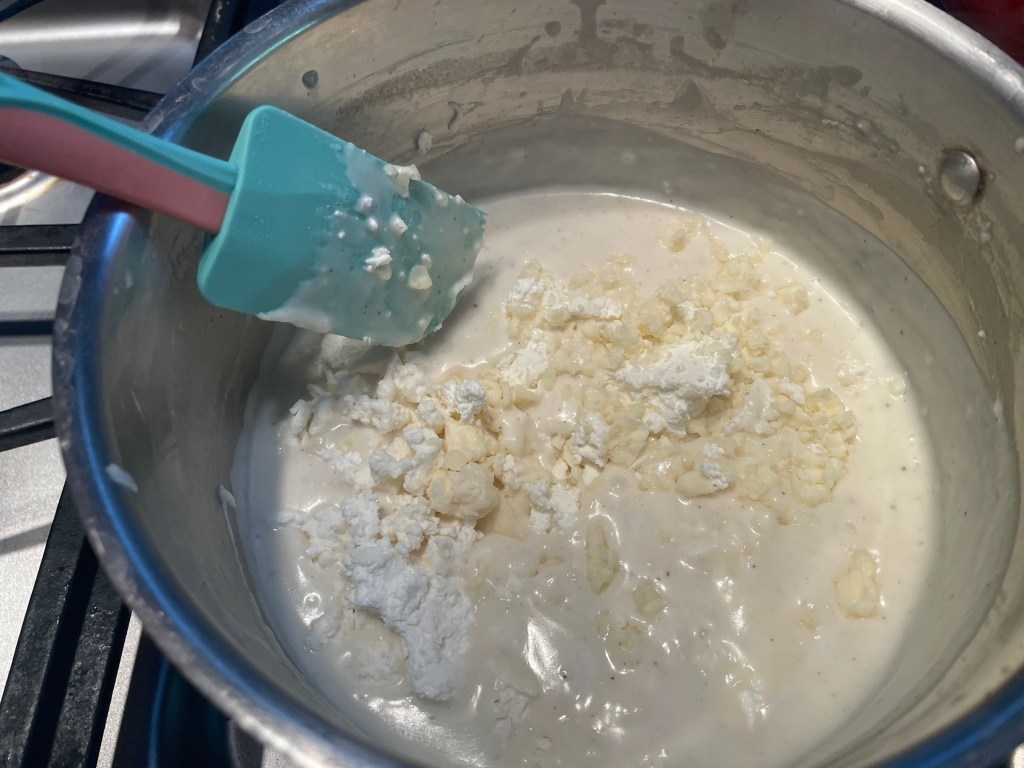
Mix in the cheese.
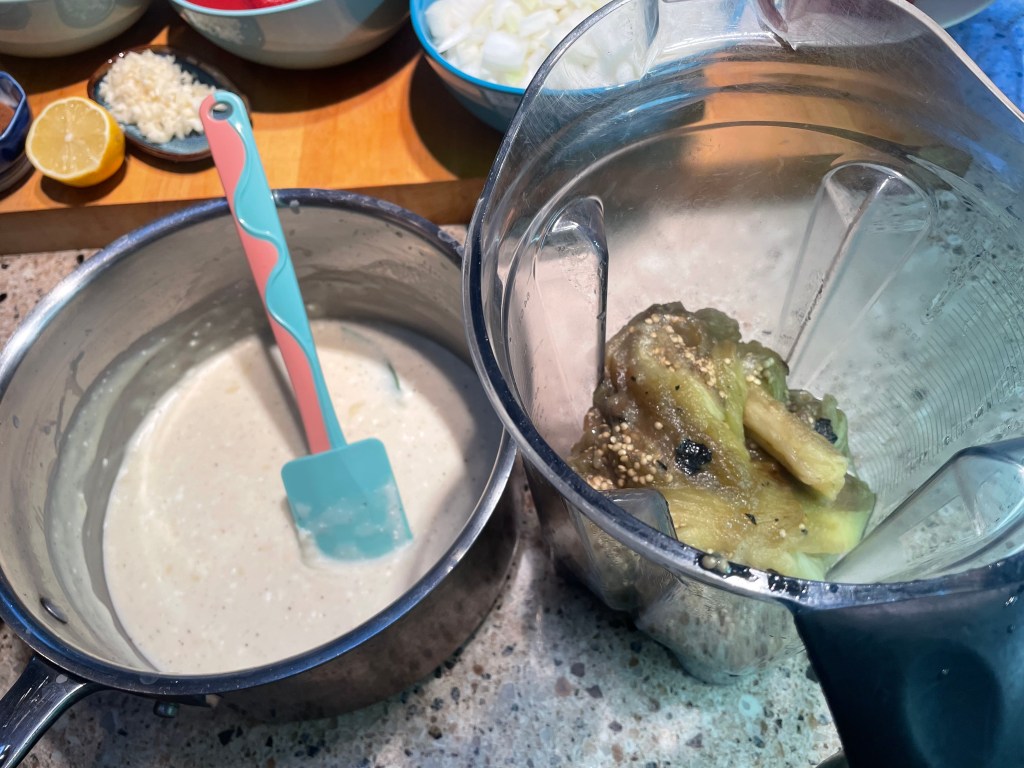
The blender, ready to do its blending thing.
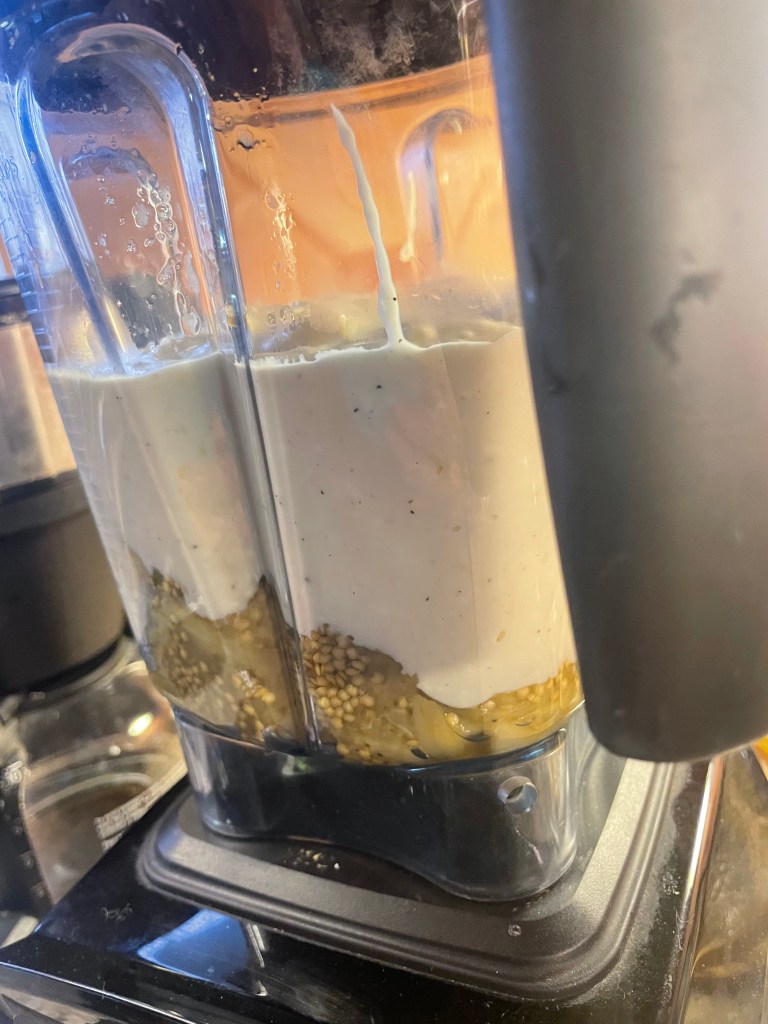
Ready…set…
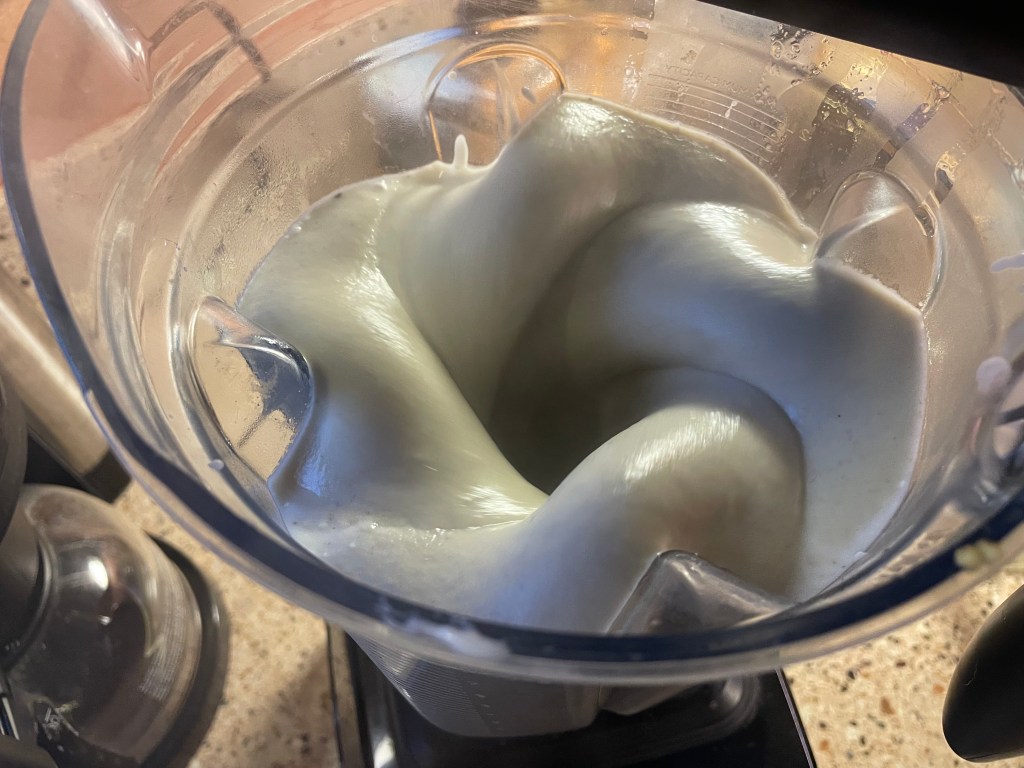
Wheee!! I mean, go!
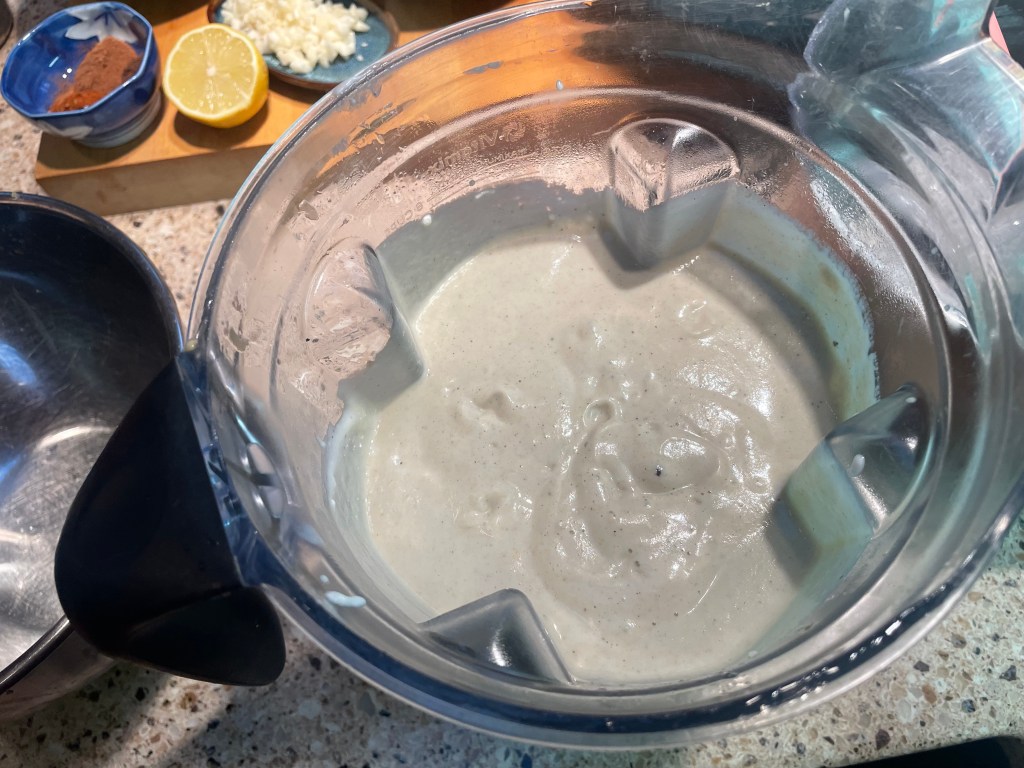
The finished sauce.
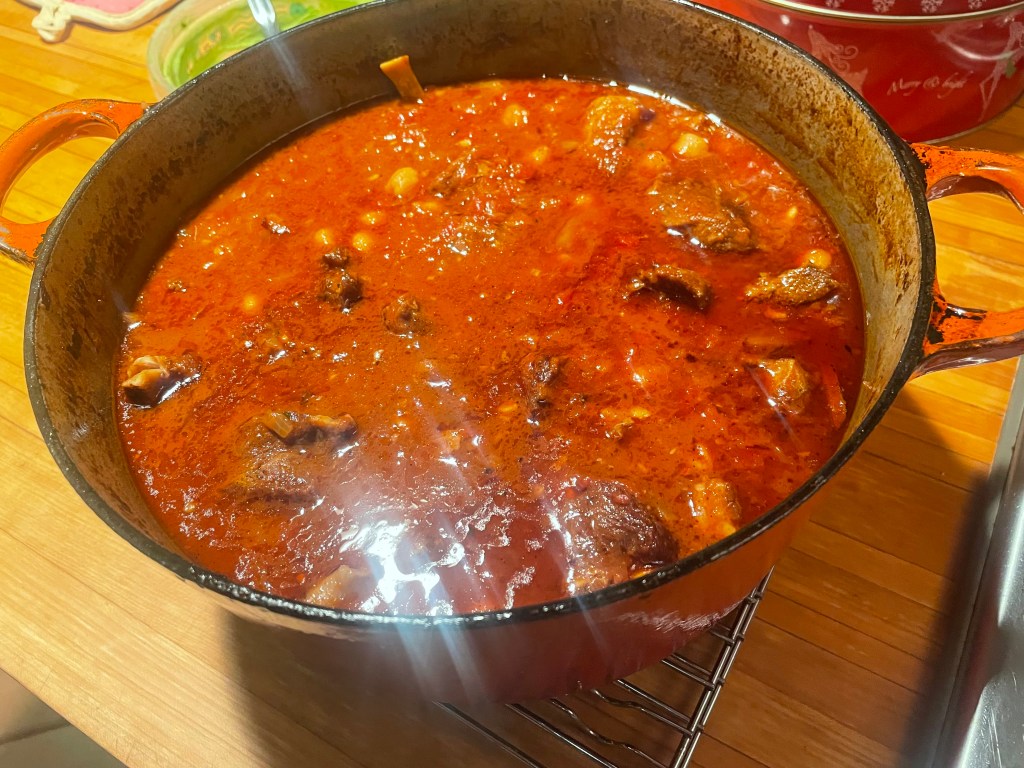
And the stew, all ready to serve.
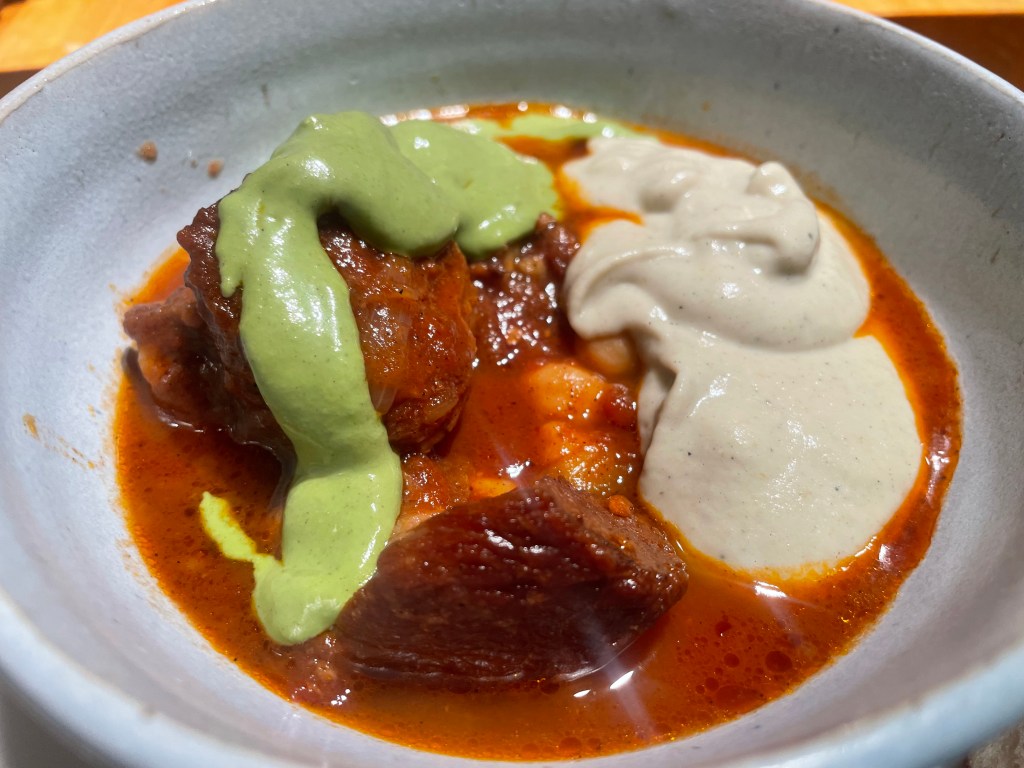
Here is the goat and chickpea stew with the eggplant cream dolloped on top. I also had a green tahini sauce (one of my favorites adapted from Nigella Lawson: 1 cup tahini blended with 1/2 cup water, indecently large bunches of cilantro and parsley, several garlic cloves, salt, pepper, lemon juice, and a touch of sugar). So I plopped some of this on top for color.

Goblin child had prepared their favorite roast potato recipe that day so, throwing all caution and authenticity to the wind, here is a bowl of stew topped with crispy taters…
 Tears of the Seldarine
Placki, placki, placuszki, nom nom nom nom nom nom nom… I’m drooling
(to the side of my keyboard).
LikeLike